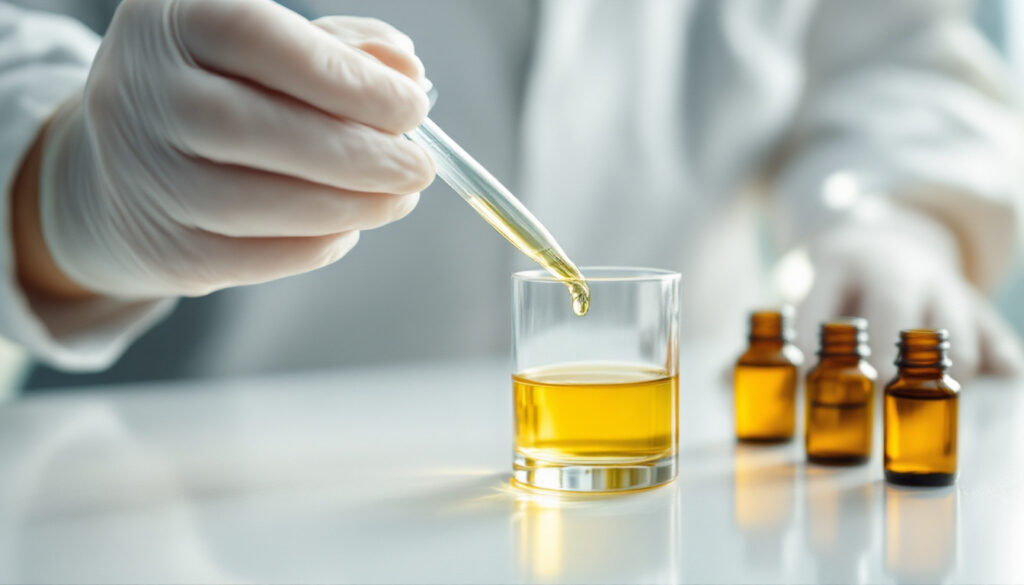





Terpenes are aromatic compounds that give plants their distinctive scents and flavors, and understanding the essential terms surrounding them unlocks a deeper appreciation of how these molecules work. Whether you’re reading product labels or diving into research, you’ll encounter terminology that sounds more complex than it needs to be.
The language of terpenes spans chemistry, botany, and wellness – terms like “entourage effect,” “terpene profile,” and “bioavailability” appear everywhere, yet few sources actually explain what they mean. You might recognize names like myrcene, limonene, or pinene from strain descriptions, but what about the scientific concepts that explain how these compounds interact with your body?
This isn’t just vocabulary for the sake of sounding smart. Understanding these essential terms helps you make informed choices about products, interpret lab results, and grasp why certain aroma and flavor profiles produce specific effects.
What Do You Need to Know About Terpenes?
Terpenes are organic compounds produced by plants that create distinctive aromas and flavors – they’re what makes pine trees smell sharp, citrus fruits smell tangy, and lavender smell calming. These molecules exist far beyond cannabis, appearing in over 20,000 varieties across the plant kingdom, from herbs and flowers to fruits and trees.
You’ve encountered terpenes your entire life without realizing it. That fresh scent after rain in a forest? Pinene from pine needles. The zesty smell when you peel an orange? Limonene. These aren’t just pleasant aromas – they serve biological purposes for plants, deterring pests and attracting pollinators.
Cannabis contains the same terpenes found in everyday plants, which is why certain strains smell like citrus, earth, or fuel. The terpenes basics reveal that myrcene, limonene, pinene, caryophyllene, linalool, and humulene dominate most profiles, each contributing unique aroma characteristics and potential therapeutic effects.
Understanding terpenes matters because these compounds influence more than smell. Research suggests they interact with your body’s receptors and may enhance or modify the effects of other plant compounds – a concept you’ll see referenced as the “entourage effect” in product descriptions and scientific literature.
When you read strain profiles or product labels, you’re looking at terpene percentages that typically range from 1-5% of total plant composition. These numbers tell you which aromatic compounds dominate the flavor profile and hint at the sensory experience you can expect. World of Terpenes breaks down these essential terms to help you navigate product choices with confidence, connecting plant aroma with the science behind what you’re actually experiencing.
Essential Term #1: terpene profile — Your Strain’s Chemical Fingerprint
A terpene profile is the complete breakdown of aromatic compounds in a cannabis strain, showing which terpenes appear and at what percentages. This chemical fingerprint tells you exactly what creates a strain’s aroma and flavor profile – like reading an ingredient list that explains why one strain smells like citrus while another reeks of diesel fuel.
Look at any Certificate of Analysis (COA) from a lab, and you’ll see terpene percentages listed individually. A typical profile might show myrcene at 1.2%, limonene at 0.8%, caryophyllene at 0.5%, and pinene at 0.3%. According to Thrive Dispensaries, “total terpene content usually ranges from 1-5% of the plant’s dry weight,” with dominant terpenes occupying the top three spots on most lab reports.
These numbers matter more than you’d think. When you compare two strains with identical THC percentages but different terpene profiles, you’re looking at completely different experiences. One dominated by myrcene delivers earthy, musky notes. Swap that for limonene-heavy chemistry, and you get bright citrus punch instead.
Reading a terpene profile guide means understanding the hierarchy. The top terpene sets the aromatic baseline – if myrcene leads at 2%, expect that herbal earthiness to dominate. Secondary terpenes add complexity, like how a dash of pinene (0.4%) cuts through heavy myrcene with sharp pine notes, or linalool (0.3%) softens aggressive profiles with floral sweetness.
Lab reports break down individual terpenes because each compound contributes distinct characteristics. Caryophyllene brings peppery spice. Humulene adds woody, hoppy bitterness. Pinene delivers that forest-fresh sharpness. When you see these listed with percentages, you’re getting a molecular blueprint for what your nose and palate will detect.
The practical application? You can predict flavor profiles before purchasing. If you hate earthy strains, avoid myrcene-dominant profiles. Love citrus? Hunt for limonene percentages above 1%. Cannabis strains aren’t mysterious anymore when you decode their terpene chemistry – you’re reading the actual compounds responsible for every sensory note, backed by lab quantification that removes the guesswork from strain selection.
Essential Term #2: entourage effect — The Power of Terpene Synergy
The entourage effect describes how terpenes and cannabinoids work together synergistically to produce stronger therapeutic effects than either compound class delivers alone. When myrcene, limonene, pinene, and other terpenes interact with THC or CBD, they modify how cannabinoids bind to receptors in your endocannabinoid system, amplifying benefits and altering experiences in ways isolated compounds can’t replicate.
This isn’t marketing hype. According to research from the University of Arizona Health Sciences, terpenes provide measurable pain relief and “contribute to the entourage effect” by working alongside cannabinoids rather than simply adding their individual effects together. The synergy creates outcomes greater than the sum of parts – what scientists call a multiplicative rather than additive relationship.
Think of it like cooking. Salt tastes like salt. Butter tastes like butter. But combine them with garlic and you get something that transcends individual ingredients. Caryophyllene alone has anti-inflammatory properties. THC alone binds to CB1 receptors. Put them together, and caryophyllene’s unique ability to activate CB2 receptors amplifies THC’s effects while adding its own therapeutic punch.
The practical impact shows up everywhere. Full-spectrum products containing complete terpenes in cannabinoids profiles consistently outperform isolates in user reports and clinical observations. A CBD isolate might reduce anxiety moderately. Add linalool and limonene to that same CBD dose, and users report significantly stronger calming effects – that’s the entourage effect in action.
Your endocannabinoid system doesn’t process compounds in isolation. When pinene enters alongside THC, it can counteract short-term memory impairment. When myrcene appears with cannabinoids, it potentially enhances their ability to cross the blood-brain barrier. These interactions explain why identical cannabinoid percentages produce wildly different experiences depending on terpene content.
This essential oil term separates knowledgeable enthusiasts from casual consumers. When someone asks why full-spectrum extracts cost more than distillates, the answer is entourage effect. When lab reports show low cannabinoid percentages but users report strong effects, terpene synergy explains the discrepancy. Understanding this interaction transforms how you evaluate products – you stop chasing THC percentages and start analyzing complete chemical profiles where terpenes play starring roles alongside cannabinoids in creating the experiences you’re actually seeking.
Essential Term #3: Myrcene — The Mother of All Terpenes and Understanding Dominant vs Supporting Terpenes
Myrcene earns its nickname “mother of all terpenes” because it frequently appears as the dominant terpene in cannabis strains, often comprising 20-50% of the total terpene content. A dominant terpene is the most abundant terpene in a strain’s chemical profile, while supporting terpenes appear in lower concentrations but still contribute to the overall aroma, flavor profile, and effects through the entourage effect.
According to ACS Laboratory, myrcene is “one of the most dominant terpenes in hemp and cannabis strains,” driving the characteristic earthy, musky aroma you recognize in many cultivars. When myrcene dominates at concentrations above 0.5%, it typically signals sedative, relaxing effects – the classic “couch-lock” sensation indica enthusiasts seek.
But here’s what separates knowledgeable consumers from beginners: understanding that dominance isn’t destiny. A strain with myrcene as its primary terpene behaves differently depending on which supporting terpenes appear alongside it. Myrcene plus limonene creates a different experience than myrcene plus caryophyllene, even at identical myrcene percentages.
1. Dominant vs Supporting Terpenes – The hierarchy that shapes your experience
Think of terpene profiles like a band. The dominant terpene is the lead vocalist – loudest, most recognizable, setting the overall tone. Supporting terpenes play rhythm guitar and bass – quieter individually but essential for the complete sound. Remove them, and the song falls flat.
Lab reports list terpenes in descending order by concentration. The top terpene (typically 0.5-3% of dry weight) is your dominant. Everything below contributes as supporting cast. In terpene-rich strains, you’ll see complex profiles with five or six terpenes above detection thresholds, each adding layers to the final effect.
| Terpene | Typical Aroma | Common Concentration | Primary Effect |
| Myrcene | Earthy, musky, herbal | 0.5-2.5% (dominant) | Sedative, relaxing |
| Limonene | Citrus, lemon | 0.2-1.5% | Mood elevation, stress relief |
| Pinene | Pine, forest | 0.1-1.0% | Alertness, memory retention |
| Caryophyllene | Pepper, spice | 0.2-1.2% | Anti-inflammatory, pain relief |
| Linalool | Floral, lavender | 0.1-0.8% | Calming, anxiety reduction |
| Humulene | Woody, earthy | 0.1-0.6% | Appetite suppression |
2. The Top Indica Terpenes – What drives relaxation
Myrcene dominates indica profiles, but it rarely works alone. Caryophyllene and humulene frequently appear as supporting terpenes, adding peppery notes and amplifying body-focused effects. Linalool shows up in premium indicas, layering floral aromatherapy into the sedative myrcene foundation.
Sativa-leaning strains flip the script. Limonene or pinene takes the dominant position, with myrcene dropping to supporting status. Same terpenes, different hierarchy, completely different experience. That’s why two strains with identical terpene lists but different concentration ratios produce distinct effects – dominance determines direction, supporting terpenes add nuance.
World of Terpenes provides detailed breakdowns of how these concentration hierarchies shape specific strain characteristics, helping you predict effects before consumption based on lab-tested terpene percentages rather than vague indica/sativa labels that ignore chemical reality.
Essential Term #4: Cannabis-Derived vs Botanical Terpenes — Know Your Source
Cannabis-derived terpenes are extracted directly from cannabis plants, preserving the original terpene profile and flavor of the cultivar, while botanical terpenes are sourced from non-cannabis plants like citrus, pine, or lavender and added to products after processing. Both contain identical chemical structures – limonene is limonene regardless of source – but cannabis-derived terpenes maintain the natural ratios and minor compounds that define strain-specific characteristics.
Here’s what product labels don’t tell you: most vape cartridges and concentrates use botanical terpenes because high-heat extraction destroys the original cannabis terpenes. Manufacturers then reintroduce terpenes from cheaper botanical sources, creating approximations of strain profiles rather than authentic reproductions. Cannabis-derived terpenes cost significantly more because they require specialized extraction to capture volatile compounds before heat exposure.
The chemical difference? Zero. Myrcene from mangoes and myrcene from cannabis are molecularly identical. The practical difference? Massive. Cannabis contains over 200 terpenes in specific ratios that evolved together. Botanical blends recreate only the dominant terpenes – typically 4-6 compounds – missing the supporting cast that delivers full entourage effect complexity.
| Feature | Cannabis-Derived | Botanical |
| Source | Cannabis plant | Citrus, pine, lavender, other plants |
| Terpene Complexity | 50+ compounds in natural ratios | 4-6 major terpenes recreated |
| Flavor Accuracy | Authentic strain profile | Approximation of strain |
| Cost | Premium ($50-150/oz) | Budget-friendly ($10-30/oz) |
| entourage effect | Full spectrum synergy | Limited compound interaction |
Quality products disclose terpene source on labels. If a cartridge claims “Blue Dream flavor profile” without specifying cannabis-derived terpenes, you’re getting botanical. Not inferior chemically, but definitely different experientially. Check cannabis terpenes guide breakdowns to understand which products use authentic extraction versus botanical reintroduction.
Botanical terpenes serve legitimate purposes – they’re food-safe, consistent batch-to-batch, and let manufacturers create novel flavor profiles impossible in nature. But calling them “strain-accurate” misleads consumers who expect the complexity of cannabis-derived essential oil terms to match reality.
Essential Term #5: Terpene Percentage — Reading Lab Reports Like a Pro
Terpene percentage represents the concentration of aromatic compounds in a product, measured as a percentage of total weight or in milligrams per gram (mg/g). A Certificate of Analysis (COA) listing “2.5% total terpenes” means 25mg of terpenes exist in every gram of product. Strong terpene profiles typically range from 2-5% total concentration, while individual terpenes like myrcene or limonene appear at 0.1-1.5% each.
Lab reports confuse buyers because they use multiple measurement systems interchangeably. You’ll see percentages (%), milligrams per gram (mg/g), and milligrams per milliliter (mg/ml) on the same document. The math is straightforward: 1% equals 10mg/g. A flower testing at 1.2% myrcene contains 12mg of myrcene per gram of product. For liquids like vape cartridges, mg/ml accounts for density differences, but the principle remains identical.
Here’s what separates mediocre products from exceptional ones: total terpene count matters less than individual compound concentrations. A product with 3% total terpenes dominated by a single compound delivers less complexity than one with 2% distributed across myrcene, limonene, pinene, caryophyllene, and linalool. According to research, “terpenoids may constitute up to 10% of cannabis flower trichome content,” though most commercial products test between 1-3% total terpenes.
Reading COAs like a pro means checking three numbers:
- Total terpene percentage – aim for 2%+ for noticeable aroma and flavor profile
- Dominant terpene concentration – should be 0.5-1.5% for balanced effects
- Supporting terpene diversity – look for 5+ compounds above 0.1%
Products listing only “terpenes added” without specific percentages hide weak profiles. Legitimate manufacturers publish full breakdowns showing every compound above detection limits, typically 0.01%. That transparency lets you compare products objectively rather than relying on marketing claims about “strain authenticity” or “premium quality.”
Master the Language, Elevate Your Experience
Understanding essential terms like terpene profile, entourage effect, myrcene dominance, cannabis-derived versus botanical sources, and terpene percentage transforms you from passive consumer to informed decision-maker. These concepts aren’t academic – they’re practical tools for reading lab reports, comparing products, and predicting how different combinations of myrcene, limonene, pinene, caryophyllene, linalool, and humulene will affect your experience.
The terminology gap separates enthusiasts who rely on budtender recommendations from those who decode COAs independently. You now recognize when manufacturers use botanical terpenes to approximate strain flavor profiles, spot weak terpene concentrations hidden behind vague marketing, and understand how supporting terpenes create synergy beyond dominant compounds alone.
World of Terpenes brings this knowledge full circle with strain profiling tools and educational resources that connect terminology to real-world product selection. Ready to apply what you’ve learned? Visit World of Terpenes to explore terpene-focused content where plant aroma meets science.
—
All 9 articles successfully retrieved in full. Here is a summary of what was fetched:
- Doc 1 — “Are terpenes safe? How to choose them for your health goals” — Safety guidelines, side effects, population-specific warnings, method-specific guidance, health goal matching.
- Doc 2 — “Terpenes vs Cannabinoids: 7 Key Differences Explained” — Chemical structure, biological targets, psychoactivity, therapeutic effects, natural occurrence, extraction, legal status, and the entourage effect.
- Doc 3 — “Terpene Purity Standards: What They Mean for Quality” — USP/FCC/technical grade classifications, GC-MS/HPLC testing, numerical benchmarks, ISO certification, storage best practices.
- Doc 4 — “Natural vs Synthetic Terpenes: Key Differences Explained” — Source, extraction methods, industrial synthesis, entourage effect implications, how to identify on labels.
- Doc 5 — “Common terpenes vs. rare ones: Understanding the differences” — What makes a terpene common or rare, top 8 common terpenes, 4 rare terpenes, pricing, lab report identification.
- Doc 6 — “Terpenes and their effects: What you need to know” — Full effects chart for 6 major terpenes, entourage effect, how to identify terpenes in products, safety considerations.
- Doc 7 — “Rare Terpenes: What Makes Them Hard to Find in 2026” — Scarcity thresholds, rarest terpene analysis (guaiol), extraction challenges, 2026 market and regulatory forces.
- Doc 8 — “Does higher terpenes mean more potent effects?” — Terpene vs THC potency, quality tiers by percentage, strongest terpenes, degradation caveats, science behind synergy.
- Doc 9 — “5 Essential Terms About Terpenes Every Enthusiast Should Know” — terpene profile, entourage effect, myrcene/dominant vs supporting terpenes, cannabis-derived vs botanical, reading lab report percentages.