




You open your stash, take a deep whiff, and instead of that earthy, piney goodness you were expecting, something smells a little… off. Musty, damp, almost like a forgotten gym bag. If that sounds familiar, there is a very real chance you are looking at moldy weed, and this is one situation where you absolutely do not want to “just try it and see.”
Mold on cannabis is more common than most people think, and it can happen to the most careful growers and consumers alike. Whether your flower got hit during cultivation, was improperly dried, or just sat in a jar too long, knowing how to spot it could save you from a genuinely unpleasant (and potentially dangerous) experience. Let me walk you through exactly what to look for.
Why Mold Grows on Cannabis in the First Place
Before we get into what it looks like, it helps to understand why it shows up. Mold is a fungus, and like all fungi, it needs two things to thrive: moisture and organic material. Cannabis, being a plant full of water and nutrients, is basically a five-star hotel for mold spores if conditions are even slightly off.
The main culprits are high humidity, poor airflow, and improper drying or curing. During cultivation, humidity above 60% in the grow room creates the perfect breeding ground. During storage, even a small amount of residual moisture in improperly cured buds can kick off a mold bloom inside a sealed jar. According to the CDC’s fungal disease information, mold spores are literally everywhere in the environment. All they need is the right conditions to germinate.
Understanding your cannabis growth stages matters here too. Plants in late flowering are especially vulnerable because the dense bud structure traps humidity inside. A thick cola that looks beautiful on the outside can be harboring mold deep in its core, which is a nightmare scenario for any grower.
What Does Moldy Weed Look Like?
This is the big question, and the answer depends on the type of mold involved. Here is what you are actually looking for:
Powdery Mildew
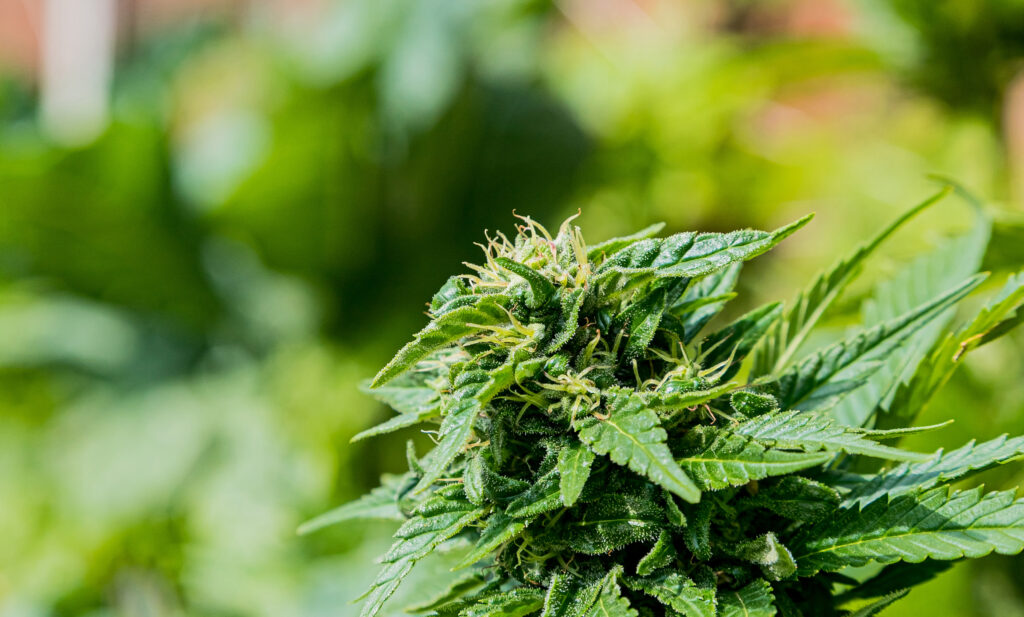
Powdery mildew is probably the most recognizable form of cannabis mold. It shows up as a white, talcum-powder-like coating on the surface of leaves and sometimes buds. It looks almost like someone dusted the plant with flour. New growers sometimes confuse it with trichomes (the sparkly resin glands that give weed its potency), but here is the key difference: trichomes are tiny crystal-like structures that glitter, while powdery mildew has a flat, dull, chalky appearance that smears if you rub it between your fingers.
If you rub trichomes, they stay put and your fingers get a little sticky. If you rub powdery mildew, you get a white smear and a faint musty smell. That is your test right there.
Botrytis (Gray Mold / Bud Rot)
Botrytis cinerea, commonly called gray mold or bud rot, is the one that genuinely keeps growers up at night. It starts deep inside dense buds, invisible to the naked eye, and works its way outward. By the time you see it, the damage is often already done.
Visually, botrytis presents as grayish-brown, web-like fuzz that looks similar to spider webs or very fine cobwebs. Affected buds will feel soft and wet when squeezed, and they may have a dark brown or gray discoloration at the core. The outer leaves near infected buds often turn yellow or wilt suddenly without any obvious nutrient reason. If you pull apart a suspicious bud and find mushy, grayish matter inside, that is bud rot. Put it down immediately and wash your hands.
This is one of the more emotionally gut-punching moments in cannabis cultivation. You have spent months nurturing a plant, and two weeks before harvest, bud rot shows up like an uninvited guest who eats all your food and leaves without apologizing.
Aspergillus
Aspergillus is the sneakier, more dangerous cousin. Unlike powdery mildew, it does not always have a dramatically obvious appearance. It can look like a dark green, black, or yellowish fuzzy growth on buds or stems. Sometimes it appears as small black dots or greenish patches that you might initially dismiss as discoloration or organic debris.
The reason aspergillus deserves particular attention is that certain species produce mycotoxins, which are toxic compounds that can cause serious respiratory issues, particularly in people who are immunocompromised. The CDC has documented aspergillosis as a significant health concern, and cannabis consumption has been flagged as a potential route of exposure in clinical literature.
My personal opinion: if you see anything dark, fuzzy, or unusual growing on your cannabis and you cannot confidently identify it, treat it as aspergillus until proven otherwise. The downside of being wrong about that assumption is infinitely worse than the downside of tossing a questionable batch.
Moldy Weed vs. Trichomes: The Definitive Test
This is the question beginners ask most often, and honestly, it is a fair one. A healthy, trichome-covered bud absolutely does look frosty and almost white under certain lighting. Here is how to tell them apart with confidence:
- Magnification: Get a jeweler’s loupe or a basic microscope. Trichomes look like tiny mushrooms or stalks with a round head. Mold looks like tangled threads or flat powder with no discernible structure.
- The rub test: Gently rub the suspicious area. Trichomes are sticky and resilient. Mold smears, crumbles, or wipes off easily.
- Smell: Healthy trichomes smell amazing, fruity, earthy, piney, whatever the strain’s terpene profile brings. Mold smells musty, damp, or like a wet paper bag. Your nose is a surprisingly reliable tool here.
- Location: Trichomes grow evenly all over the bud and sugar leaves. Mold tends to appear in concentrated patches, often at the base of buds or in dense, poorly-ventilated areas.
- Color: Trichomes are clear to white to amber depending on maturity. Mold can be white, gray, brown, green, or black. Anything non-white is an immediate red flag.
The Health Risks of Smoking Moldy Weed
Let me be direct here: smoking moldy cannabis is a bad idea, and not in a “mild headache” kind of way. Combusting mold and inhaling the smoke does not neutralize the mold or its byproducts. You are delivering mold spores and potentially mycotoxins directly into your lungs.
For healthy individuals, this might result in a coughing fit, irritation, headaches, or nausea. For people with respiratory conditions like asthma, or for immunocompromised individuals, the consequences can be significantly more serious. The FDA has raised concerns about cannabis contaminants including mold and mycotoxins, particularly in states where product testing requirements vary.
Beyond smoking, vaping moldy weed is not a safer alternative. You are still aerosolizing mold particles and inhaling them. In my view, no high is worth a trip to urgent care, and I say that without any judgment attached.
How to Check Your Weed for Mold Before You Use It
Here is a practical inspection routine that takes about 60 seconds and could save you a lot of trouble:
- Smell it first. Seriously, your nose knows. Any musty, stale, or “off” odor is your first warning sign.
- Look at it under good light. Take it to a window or use a bright flashlight. Look for uneven white patches, fuzzy growth, or discoloration.
- Break it open. Snap the bud apart and inspect the interior. Healthy interiors are usually green with visible trichomes and a fresh smell. Brown, gray, or mushy cores are bad news.
- Check the stem. Mold often starts at the stem and works inward. A dark, wet-looking stem is a warning sign.
- Use magnification if in doubt. A $10 jeweler’s loupe from any hardware store will give you a clear view of what is actually on your flower.
Understanding the full cannabis bud structure makes this inspection much easier because you know exactly what a healthy bud should look like inside and out.
What About Weed That Is Just Old?
Old cannabis and moldy cannabis are different things, though improper storage can turn the former into the latter. Old, well-stored weed typically just loses potency as THC degrades into CBN over time. It may be dry, crumbly, and lack aroma, but it is not inherently dangerous.
Moldy weed, on the other hand, has active fungal growth. The presence of mold is a contamination issue, not a freshness issue. A bud stored in a humid jar for two weeks can be far more dangerous than a bud stored properly for two years. Storage conditions matter enormously, and if you want to get into the weeds (pun absolutely intended) on that, the cannabis deficiencies identification guide also touches on environmental stressors that affect plant and product health.
Prevention: How to Keep Your Cannabis Mold-Free
Prevention is the only strategy that actually works here. Once mold takes hold, there is no salvaging affected buds. Here is what actually matters:
During Growing
- Keep relative humidity between 40% and 50% during flowering. Above 60% is when botrytis becomes a real threat.
- Ensure strong airflow throughout the canopy. Oscillating fans are not optional; they are mandatory.
- Avoid dense planting that restricts airflow between plants.
- Inspect plants daily during late flowering, especially for signs of bud rot starting deep in colas.
- Remove fan leaves that are blocking airflow to bud sites.
During Drying and Curing
- Dry in a dark room at 60 to 70°F with 45 to 55% humidity for 7 to 14 days.
- Do not rush the drying process. Fast drying at high temperatures destroys terpenes and invites mold.
- Cure in glass mason jars. Open them daily for the first two weeks (burping) to release moisture.
- Use a hygrometer inside your jars. You want 58 to 62% relative humidity inside the jar during curing.
- Boveda humidity packs are genuinely worth the small investment for maintaining stable storage humidity.
During Long-Term Storage
- Keep cannabis in airtight glass containers away from light and heat.
- Do not store in plastic bags long-term. Plastic can hold static charges that strip trichomes and does not regulate humidity well.
- If mold appears in one jar, do not assume the others are safe. Inspect everything.
When to Just Throw It Away
I know it hurts. I know the inner voice says “maybe just pick off the bad part.” Here is the hard truth: mold spreads through the air via spores. By the time you can see visible mold growth, spores have already spread to surrounding buds. Picking off the moldy bit and smoking the rest is like pulling the moldy corner off bread and eating the rest. Some people do it. Most food scientists say not to.
With cannabis, where you are literally inhaling combustion products directly into your lungs, the calculus is even less forgiving. If there is any doubt, throw it out. Your lungs will thank you, and honestly, so will your overall enjoyment of cannabis. Moldy weed produces a harsh, unpleasant smoke anyway, so you are not missing much.
Final Thoughts
Moldy weed is a real issue that deserves more attention than it typically gets, especially as legal cannabis markets continue to evolve and testing requirements vary dramatically by state. In legal markets, products are supposed to be tested for mold and mycotoxins before sale. In practice, testing protocols and enforcement are inconsistent. That is a regulatory gap that, in my opinion, the industry needs to take much more seriously.
Until testing standards are universal and enforced, knowing how to identify mold yourself is a practical skill every cannabis consumer should have. It takes about 60 seconds, it costs nothing, and it is the difference between a good experience and a trip to your doctor with a suspicious respiratory situation.
Check your weed. Smell it, look at it, break it open. Know your trichomes from your mold. And if in doubt, throw it out.