



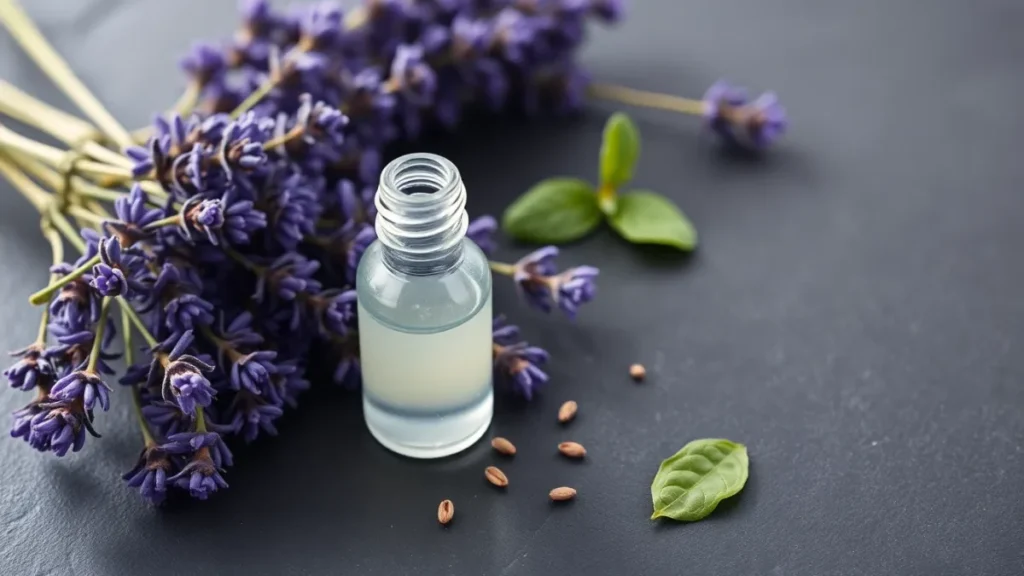
Crush a sprig of lavender between your fingers and that soft, floral, slightly spicy smell that follows you around for the next hour? A lot of it is one molecule: linalool. The same compound turns up in coriander seed, basil, mint, cinnamon and plenty of cannabis cultivars, which is why a jar of certain flower can smell faintly like a spa shelf.
Linalool has a bigger reputation than almost any other terpene when it comes to relaxation. People reach for it for stress, anxiety and sleep, and lavender oil has been sold on that promise for centuries. The interesting part is how much of that folklore now has real laboratory and clinical backing, and where it still runs ahead of the evidence. This guide covers linalool terpene effects honestly: what it is, what it does, and what we genuinely know versus what we’re still guessing.
What is linalool?
Linalool is a naturally occurring monoterpene alcohol with the molecular formula C10H18O, catalogued in PubChem as compound 6549. In plain terms, it’s a small, volatile, oily molecule that evaporates easily, which is why you smell it the moment you bruise a leaf.
It exists as two mirror-image forms (enantiomers). The version found heavily in lavender and rosewood tends to be sweeter and more floral, while the form common in coriander and basil leans slightly sharper and more herbal. Your nose can sometimes tell the difference, even if the chemistry looks nearly identical on paper.
Like other terpenes, linalool isn’t intoxicating on its own. It’s an aroma compound first, and a possible bioactive second. If you’re new to how these molecules differ from THC and CBD, our explainer on terpenes versus cannabinoids is a useful starting point.
What does linalool smell like, and where is it found?
Linalool smells floral and fresh, with a lavender core and faint hints of citrus and warm spice. It’s one of the most recognisable scents in the terpene world because it shows up in so many everyday plants and products.
You’ll find meaningful amounts of it in:
- Lavender, where it’s often the dominant or co-dominant aroma compound
- Coriander (the seed especially) and basil
- Mint, cinnamon and bay laurel
- Cannabis, where it appears in many cultivars, usually as a minor terpene rather than the headline one
Because it’s so widespread, linalool is also one of the most common fragrance ingredients in soaps, lotions and cleaning products. If a label lists “linalool” near the bottom, that’s an EU allergen-disclosure rule at work, not a sign the product is unusual. More on why that matters later.
How does linalool work in the brain?
Here’s the short version: linalool seems to calm nervous-system excitability, and the GABA system is the leading explanation.
GABA is the brain’s main “slow down” signal. Benzodiazepines like diazepam work by boosting it. Several studies suggest linalool nudges the same machinery. In one well-cited mouse experiment published in Frontiers in Behavioral Neuroscience, inhaled linalool odour produced clear anxiety-reducing behaviour, and that effect was “mediated by GABAergic transmission via benzodiazepine-responsive GABAA receptors.” Crucially, pretreating the mice with flumazenil (a drug that blocks the benzodiazepine site) completely abolished the effect. That’s a strong mechanistic clue that linalool is touching the same pathway as classic anti-anxiety medication, at least in rodents.
GABA isn’t the whole story. Older work in Phytomedicine showed linalool has anticonvulsant properties and “modulates glutamate activation” through competitive antagonism of glutamate binding and interaction with the NMDA receptor complex. Glutamate is the brain’s main “speed up” signal, so dialling it down fits the same calming theme. A broader 2022 review in Current Neuropharmacology pulls these threads together, describing linalool’s GABAergic, glutamatergic, anti-inflammatory and antioxidant actions, while being upfront that most of this evidence is preclinical and the precise targets still need pinning down.
If the neuroscience side interests you, we go deeper on receptor pathways in our piece on the neuroscience behind terpene effects.
Does linalool actually reduce anxiety and stress?
This is where linalool earns most of its reputation, and where the evidence is genuinely strongest, but you need to separate two very different things: inhaled lavender aroma, and swallowed lavender oil.
The clinical standout: oral lavender oil (Silexan)
The most convincing human data doesn’t come from sniffing a candle. It comes from a standardised oral lavender oil capsule called Silexan, used in proper randomised controlled trials. A 2023 meta-analysis in European Archives of Psychiatry and Clinical Neuroscience pooled five double-blind, placebo-controlled trials and concluded that “Silexan exerts significant anxiolytic effects in subthreshold anxiety, GAD and MADD,” with a roughly 2.9-point advantage over placebo on the Hamilton Anxiety Rating Scale and a better responder rate, alongside a favourable safety profile.
That’s notable for a botanical. In one of the underlying trials it performed comparably to a low-dose prescription antidepressant on anxiety scores, without the same side-effect baggage. Linalool is one of the two main constituents of that oil (the other being linalyl acetate), so it’s reasonable to credit it as part of the active picture, though it isn’t the only ingredient.
The aroma evidence is softer
Inhaled lavender is far more studied in animals than in well-controlled human trials. The mouse and rat work on inhaled linalool is consistent and points to real anxiolytic and sedative effects, but rodents aren’t people, and “smells nice and feels calming” is notoriously hard to blind in a human study. So treat “lavender aromatherapy lowers anxiety” as plausible and low-risk, but not nailed down to the same standard as the oral capsule.
Linalool, lavender and sleep
Poor sleep is probably the most common reason people seek out linalool, and here the human evidence is more encouraging than for aromatherapy and anxiety.
A 2021 systematic review and meta-analysis in Medicine (Baltimore) pooled 34 studies and concluded that “inhalation aromatherapy is effective in improving sleep problems such as insomnia,” with a medium-to-large effect size. Notably, the authors reported that “among the single inhalation methods, the lavender inhalation effect was the greatest,” and that single oils outperformed blended ones.
The animal work lines up with that. Inhaled linalool has been shown to reduce locomotion, lower body temperature and extend sleep time in rodents, which is the classic signature of a mild sedative. None of this makes linalool a sleeping pill, and the human trials vary in quality, but as a low-risk wind-down ritual the evidence is reasonably supportive.
Linalool in cannabis, and the “indica equals couch-lock” myth
If you’ve ever been told a strain is sedating “because it’s an indica,” linalool is part of why that shorthand feels true and also part of why it’s misleading.
Cultivars marketed as relaxing often do carry calming terpenes, and linalool is sometimes one of them. But the indica versus sativa split is a poor predictor of actual chemistry. A 2017 study in Cannabis and Cannabinoid Research mapped terpenoid profiles across high-THC cultivars and found that the popular indica/sativa labels don’t reliably correspond to chemical profiles. The researchers identified distinct terpene-based chemotypes that predict aroma and likely effect far better than the old morphological categories.
The honest takeaway: if you want linalool-driven calm, read the terpene certificate of analysis, not the strain category. A so-called sativa with high linalool and myrcene may feel more relaxing than an “indica” loaded with energising terpinolene. We unpack this in more detail in our cannabis terpenes guide, and the same “check the profile, not the name” logic applies to limonene and mood too.
Linalool on skin: soothing, but with a catch
Beyond the brain, linalool shows up constantly in topical and cosmetic formulations, partly for fragrance and partly for its reported anti-inflammatory activity. The depression review mentioned above notes linalool’s inhibition of inflammatory cytokines, which is one reason it’s a popular addition to calming skincare and balms. Considered terpene blends from Entour™’s topicals applications reflect this wider move toward terpene-forward formulations rather than relying on a single isolated aroma compound.
There is a real catch on the skin side, and it’s worth knowing before you go heavy on essential oils. Pure linalool is only a weak allergen, but it doesn’t stay pure. On contact with air it slowly oxidises, and the oxidation products (hydroperoxides of linalool) are much stronger skin sensitisers. A patch-test study published in Contact Dermatitis found positive reactions to oxidised linalool in 11.7% of tested dermatitis patients, with the authors confirming that “upon air exposure, oxidation occurs” and that the resulting hydroperoxides are “potent sensitizers.”
So an old, half-used bottle of lavender oil that’s been open on the bathroom shelf for a year is more likely to irritate skin than a fresh one. Store essential oils sealed, cool and dark, and patch test anything new. If you react to fragranced products, oxidised linalool is a genuinely common culprit.
Practical takeaways for consumers
If you want to put linalool to work sensibly, here’s a grounded approach:
- For sleep and wind-down, inhaled lavender is low-risk and has reasonable human support. A few drops on a tissue or a diffuser before bed is a fair experiment.
- For clinical-grade anxiety help, the standardised oral preparation (Silexan) has the strongest trial evidence. Treat it like a supplement decision and talk to a clinician, especially if you take other medication.
- For cannabis, ignore the indica/sativa label and read the terpene results. Look for linalool alongside other calming terpenes if relaxation is the goal.
- For skin, buy small, store airtight, and replace old oils. Oxidised linalool is the problem, not fresh linalool.
- Keep expectations realistic. Most of the dramatic mechanistic findings are from animals or cells. Linalool is a gentle helper, not a sedative drug.
Frequently asked questions
Is linalool safe?
For most people, in normal food, cosmetic and aromatherapy amounts, linalool is well tolerated and widely used. The main caveat is skin: oxidised linalool can cause allergic contact dermatitis in sensitive people, which is why fresh, well-stored product matters. As with any concentrated essential oil, more isn’t better.
Does linalool make you high?
No. Linalool is a non-intoxicating aroma terpene. It may influence mood and relaxation through GABA and glutamate pathways, but it doesn’t produce the psychoactive effect that THC does.
Is linalool the same as lavender oil?
Not quite. Lavender oil is a mixture of many compounds, with linalool and linalyl acetate as two of the most important. So linalool is a major active part of lavender oil, but lavender oil contains a lot more than linalool alone.
Can linalool really help with anxiety and sleep?
The best human evidence is for standardised oral lavender oil in anxiety, and for inhaled lavender in sleep, both backed by published trials and meta-analyses. The direct effects of isolated linalool are mostly shown in animal studies, so think of it as promising and low-risk rather than a proven medicine.