


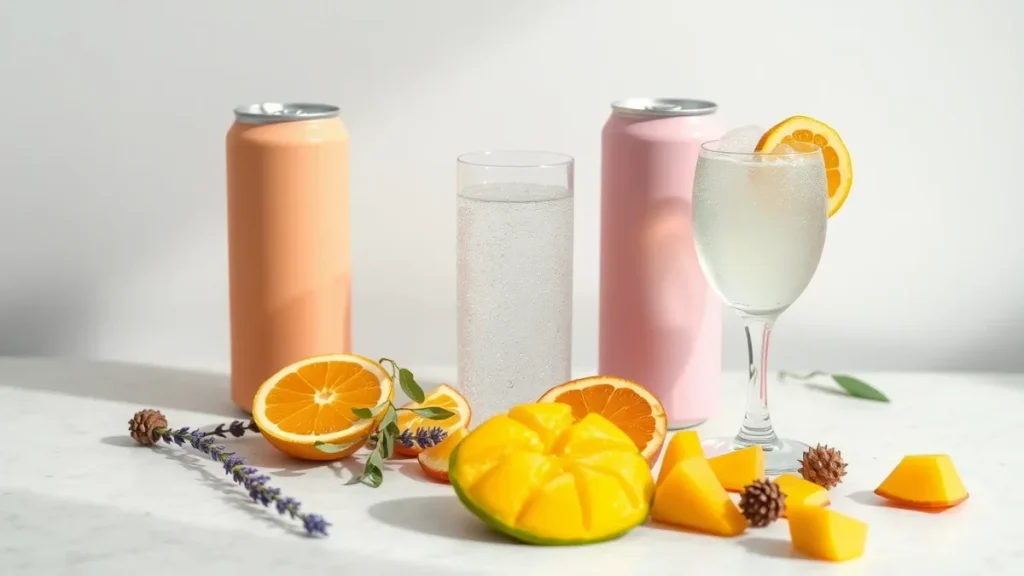
Walk down the chiller aisle in 2026 and you will spot it: cans promising “calm,” “focus,” or “uplift,” with an ingredient list that quietly name-drops limonene or linalool. Terpene-infused drinks have gone from a niche curiosity to a genuine category, sitting alongside sparkling waters, non-alcoholic spirits, energy shots and hemp beverages.
The pitch is appealing. Add the aromatic molecules that give cannabis and citrus their smell, and you get flavour plus a “mood” on the side. The flavour part is real and well understood. The mood part is where things get complicated, and where most of the marketing gets ahead of the science.
This guide separates the two. What terpenes genuinely bring to a beverage, what the function claims actually rest on, how these drinks are made, and what the rules say about putting terpenes (and cannabinoids) in something you drink.
What are terpene-infused drinks?
Terpene-infused drinks are non-alcoholic beverages that have aromatic plant compounds called terpenes added to them, usually for flavour and aroma, and increasingly for a “functional” mood positioning.
Terpenes are the volatile oils responsible for how plants smell. Limonene is the bright citrus note in lemon peel. Linalool is the soft floral edge of lavender. Myrcene carries that earthy, slightly clove-like aroma you get from hops and mangoes. They show up across thousands of plants, not just cannabis, which is a point worth holding onto when a label leans hard on the cannabis association.
In a drink, terpenes do a few jobs. They add natural-tasting flavour without sugar. They build aroma, which is most of what we perceive as “taste.” And in cannabis and hemp beverages, they round out the profile of the cannabinoids alongside them. If you want the basics on the molecules themselves, our guide to terpenes and their effects is a good starting point before you read any label too literally.
Why terpene drinks blew up in 2026
Three trends collided. The non-alcoholic movement created demand for grown-up drinks that do something other than get you tipsy. The functional beverage boom trained shoppers to expect a benefit beyond hydration. And the hemp and THC drink category, riding the gap left by stalled CBD regulation, needed flavour systems that work in water.
Terpenes slot neatly into all three. They let a brand build a sophisticated botanical flavour and tell a wellness story at the same time. A citrus blend leaning on limonene gets positioned as bright and energising. A floral blend with linalool and myrcene gets sold as calming and good for winding down.
The demographics help too. Younger drinkers in particular are buying into self-care framing and reading ingredient panels more closely than previous generations did. A terpene name on the label signals “intentional” in a way that a generic “natural flavour” never could.
Flavour and aroma: the part that genuinely works
Here is the honest headline. Flavour is the solid, defensible use case for terpenes in drinks. Everything else is shakier.
Terpenes are intensely aromatic at tiny concentrations, so they can deliver recognisable fruit, citrus, floral or herbal character without the sugar, calories or cloudiness that fruit purees and juices bring. That makes them a useful tool for zero-sugar formats where flavour is otherwise hard to nail.
They also let formulators build profiles that do not exist as a single fruit. A “sativa-inspired” citrus-pine note, for example, comes from blending limonene with pinene. If you want to understand why one citrus terpene tastes and behaves the way it does, our breakdown of limonene’s effects covers the aroma chemistry as well as the claimed effects.
The “mood” claims, and why to be skeptical
This is the part the marketing loves and the evidence does not fully support. Calming blends built around linalool and myrcene, uplifting blends built around limonene, the implication is that the drink will shift how you feel.
There is real pharmacology behind these terpenes. Reviews describe linalool, limonene and myrcene as showing anxiolytic, sedative and anti-inflammatory activity through mechanisms like GABA-A and serotonergic modulation. A 2024 review of cannabis terpenes in chronic pain notes that these compounds have “demonstrated a broad spectrum of biological activities,” but it is blunt about the catch: “although preclinical findings are promising, clinical translation is limited by methodological variability, the lack of standardized formulations, and insufficient pharmacokinetic characterization.”
Translate that out of journal-speak: most of the encouraging results come from cell cultures and rodents, often at doses far higher than anything in a can. A review of myrcene reaches the same conclusion, noting that while it shows promise in animal work, “studies conducted in humans is lacking.” The linalool literature, much of it built on lavender aromatherapy, sits in the same place, with a 2023 review on linalool and depression flagging open questions about “its kinetics, doses, routes of administration.”
The “entourage effect,” the idea that terpenes meaningfully boost cannabinoids, is on similar footing. A 2025 comprehensive review put it plainly: “the potential for synergistic or additive enhancement of cannabinoid efficacy by terpenes remains unproven. Further clinical trials are needed.” An earlier paper specifically on terpenes for mood and anxiety disorders concluded the combinations it proposed had “yet to be verified, clinically.”
None of this means terpenes do nothing. It means the doses in a typical functional drink are tiny, the human evidence at those doses is thin, and aroma-driven expectation (you smell calm citrus, you feel a bit calmer) is doing a lot of the work. If a label promises a guaranteed mood shift, treat it as marketing, not pharmacology.
The formulation reality: oil meets water
Even setting effects aside, getting terpenes into a stable drink is harder than it looks. Terpenes are oils. Water-based drinks are water. Those two do not mix on their own, and an untreated terpene will just float to the top as a slick, separate layer.
So formulators reach for a few standard tools:
- Emulsifiers. Ingredients like lecithin or gum acacia have one end that loves water and one that loves oil, letting them suspend terpene droplets evenly through the liquid.
- Nanoemulsions. High-shear or ultrasonic processing breaks the oil into droplets so small they stay suspended, look clear rather than cloudy, and tend to disperse faster on the tongue.
- Encapsulation. Wrapping volatile terpenes in a protective carrier helps them survive heat processing and stay in the liquid instead of escaping through the can lining or headspace over months on a shelf.
Two practical headaches sit underneath all of this. Terpenes are volatile and heat-sensitive, so they are usually added after pasteurisation rather than before, or protected by encapsulation. And the dose is genuinely minuscule. Flavour-level terpene use is measured in parts per million, which is one more reason the “functional” mood story is hard to deliver at the same time. The amount you need for a clean flavour is often well below any dose with a plausible physiological effect.
Brands building in this space, including formulators using beverage-ready terpene blends from Entour™, generally start from water-dispersible or pre-emulsified systems rather than trying to dose raw terpene oil into a finished drink.
The regulatory and safety picture
Here is where the two halves of a terpene drink, the terpenes and any cannabinoids, get treated very differently.
Terpenes as flavours: mostly recognised
Many common terpenes have a long history as food flavourings and carry FEMA GRAS (Generally Recognized As Safe) status for that use. D-limonene is listed in the FEMA Flavor Library under FEMA number 2633, referenced against 21 CFR 182.60. Linalool sits in the same library as FEMA number 2635. That GRAS framing is specifically about safe use as a flavouring ingredient at typical flavour levels, not a blanket endorsement of high-dose “functional” use or any health claim.
The safety nuance matters. “Safe as a flavour at parts-per-million” is not the same as “safe at any dose,” and it says nothing about whether the terpene does what the label implies. Concentrated terpenes can be irritating, which is why dosing and sourcing matter. If you are evaluating an ingredient or a supplier, our notes on whether terpenes are safe and how to choose them walk through the practical checks.
Added cannabinoids: a separate, stricter problem
If a drink adds CBD or THC, it steps into entirely different territory. The US Food and Drug Administration has concluded that existing food and supplement frameworks are not appropriate for CBD, and it treats adding CBD to conventional food or beverages sold in interstate commerce as a prohibited act under the federal food law, because CBD is not an approved food additive and is not recognised as GRAS for that use. The agency has issued warning letters to companies selling CBD-infused food and drinks on exactly that basis.
So the regulatory split is this: the terpene flavour system in your drink is usually on solid, well-trodden ground, while any added cannabinoid is in a contested, actively-enforced grey zone that varies by jurisdiction and is still moving. If you are a brand, that distinction should shape your formulation and your label copy. For the difference between the two ingredient classes, see our explainer on terpenes versus cannabinoids.
Practical guidance
For beverage brands
- Sell the flavour first. It is the claim you can actually defend, and it is genuinely good.
- Keep mood language soft and honest. “Crafted with calming botanicals” is defensible; “clinically proven to reduce anxiety” is not.
- Start from a water-dispersible or emulsified terpene system, and add volatile terpenes post-heat to protect aroma.
- Treat any cannabinoid as a separate regulatory project with its own legal review, not an afterthought.
For curious consumers
- Buy these drinks because they taste good, not because you expect a reliable dose of “calm” or “focus.”
- Read the panel. A terpene named for flavour is normal; a dramatic health claim is a flag.
- Notice the difference between a drink with terpenes only and one with added CBD or THC, since they carry very different rules and effects.
- If you take medication, remember some terpenes and especially cannabinoids can interact with it, so the “it’s just a flavour” framing has limits.
FAQ
Do terpene drinks actually make you calm or energised?
At the tiny, flavour-level doses used in most drinks, there is little human evidence for a reliable mood effect. The terpenes have real pharmacology in lab and animal studies, but that work usually uses far higher doses, and reviews consistently say the human clinical picture is thin. Aroma and expectation likely account for a lot of what people feel.
Are terpenes in drinks safe?
Common terpenes like limonene and linalool are recognised as safe flavouring ingredients at typical flavour levels and have a long history of use in food and beverages. That GRAS status is about flavour use, not unlimited dosing, and concentrated terpenes can be irritating, so sourcing and dose still matter.
Is it legal to add CBD or THC to a drink?
Adding terpenes for flavour is generally fine. Adding cannabinoids is a different and stricter question. In the US, the FDA does not consider CBD an approved or GRAS food additive and treats adding it to food or beverages in interstate commerce as prohibited, and it has acted against companies doing so. Rules for hemp-derived THC vary and are still evolving.
Why do terpene drinks sometimes separate or smell off over time?
Terpenes are volatile oils that do not naturally mix with water and degrade with heat and time. Without proper emulsification or encapsulation they separate, and the aroma can fade or change in the can. Good formulation, post-heat addition and stable emulsions are what keep a terpene drink consistent.
The bottom line
Terpene-infused drinks are a real and growing category, and the flavour story behind them is legitimate. Terpenes let brands build clean, natural-tasting, sugar-free profiles that nothing else quite matches.
The “function” is where you should keep your guard up. The mood positioning rests largely on preclinical research at doses far above what is in your glass, and the most rigorous reviews still call the effects unproven in humans. Enjoy these drinks for how they taste. Treat the wellness promises as the marketing layer, not the science.