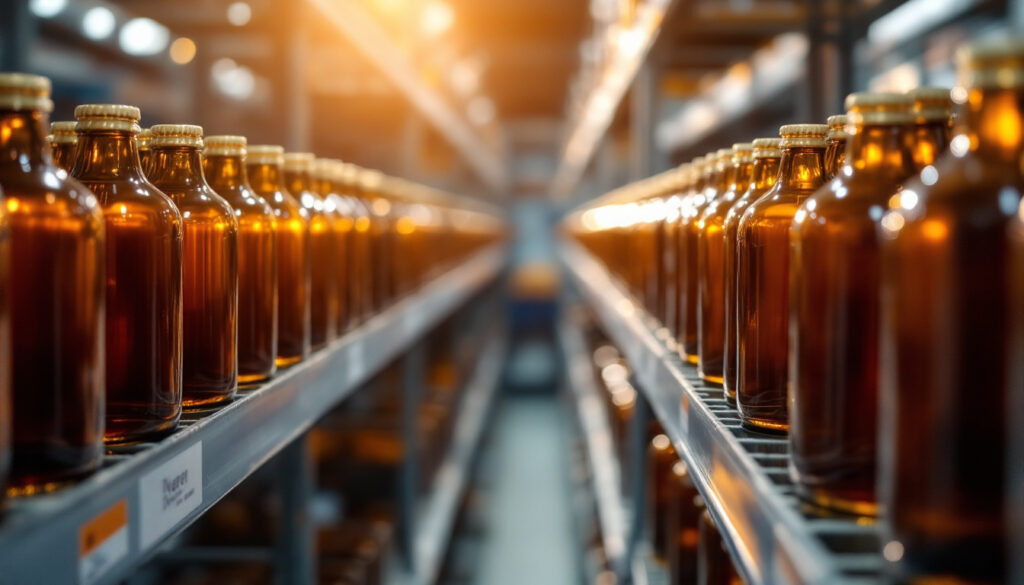





Most terpene procurement failures don’t happen at production. They happen months earlier, when a promising sample never got stress-tested before someone committed to a five-figure order. By then the packaging is locked, the launch date is set, and you’re stuck reformulating on the fly.
A stage-gated pipeline fixes that. Instead of jumping from “this sample smells great” to “let’s buy a drum,” you move through four deliberate stages, each with a go/no-go decision at the end. This guide walks procurement leads and supply chain managers through the full terpene procurement pipeline, from first sample to recurring production orders, with realistic timelines for both a fast path and a safe path.
Why a Stage-Gated Pipeline Beats Winging It
Terpenes are volatile, sensitive to heat, light, and oxygen, and they behave differently once they’re inside your actual product. A blend that performs beautifully on its own can flatten, separate, or shift flavor completely when you scale it into a real formulation.
Stage gates force you to catch problems while they’re still cheap to fix. Each stage answers one question, produces one output, and ends with a documented decision. If a supplier can’t clear a gate, you find out before the money is committed, not after.
Here’s the pipeline at a glance, with typical goals, cost exposure, and outputs per stage.
| Stage | Primary Goal | Typical Cost Exposure | Output |
|---|---|---|---|
| 1. Discovery & Evaluation | Shortlist suppliers, test samples in product | Low (samples often free or nominal) | Scored supplier shortlist |
| 2. Validation & Specs | Prove stability, lock a written spec | Low to moderate (small run) | Approved spec sheet + go/no-go |
| 3. Scaling & Customization | Negotiate terms, sign a contract | Moderate to high (first scaling order) | Signed supply agreement + QA plan |
| 4. Production & Scaling | Run recurring orders, optimize cost | High (ongoing) | Steady supply + per-batch QC |
Stage 1: Discovery and Evaluation (Weeks 1 to 4)
This is where you go wide before you go deep. The goal is to build a shortlist of suppliers, get samples in hand, and test them inside your real product rather than sniffing a vial and calling it a day.
Start by researching suppliers on the things that actually matter: analytical transparency, sourcing method, and manufacturing standards. A supplier that runs GC-MS testing and works to cGMP standards tells you something a slick website never will. Look for a real analytical chemistry background behind the blends, not just a catalog of flavors.
Then request samples. Structured sample evaluation is worth setting up properly, because a good terpene sample evaluation process gives you comparable data across every supplier instead of a pile of subjective impressions. Test each sample at your target dosing, in your actual base, under conditions close to how the product will really be used.
Score everything on a rubric so you’re comparing apples to apples. A simple scoring approach:
- Aroma and flavor accuracy against your target profile
- Performance in product (does it hold up when blended, not just neat?)
- Analytical documentation (COA quality, GC-MS data, batch consistency)
- Supplier responsiveness and technical support
- Sourcing and compliance transparency
Success metric for Stage 1: a scored shortlist of two or three suppliers whose samples cleared your minimum threshold in a real product test. If nothing clears, that’s a valid result too. Keep sampling before you commit.
Stage 2: Validation and Specs (Weeks 3 to 6)
A sample that wins the taste test can still fail in the real world. Stage 2 exists to prove that your shortlisted blend survives contact with production, and to turn “we like it” into a written specification everyone can hold the supplier to.
Run a small production batch using the candidate terpene. Keep it small, but make it representative of your real process, including the heat, mixing, and fill steps the product will actually go through. Then put it on a stability schedule.
A 4-week stability check is a reasonable minimum for an early read, though longer studies give more confidence for products with a long shelf life. You’re watching for shifts in aroma, color, separation, and potency loss over time. A blend that drifts noticeably in four weeks is a warning you want now, not after launch.
By the end of this stage you should have a written spec sheet: target terpene ratios, allowable tolerances, appearance, required COA parameters, and storage conditions. That document becomes the contract’s backbone and your QC reference for every future batch.
Success metric for Stage 2: a documented go/no-go decision backed by stability data and an approved spec sheet. If the batch holds and the spec is signed off, you gate through. If it drifts, you either reformulate with the same supplier or drop back to Stage 1 with the next candidate.
Stage 3: Scaling and Customization (Weeks 6 to 10)
Now the conversation shifts from “does it work” to “can we buy it reliably and affordably.” Stage 3 is where you place your first real scaling order, negotiate commercial terms, and sign a contract that protects both sides.
This is also the point to explore customization. If your validated blend needs tweaks for scale, a cleaner profile, a tighter ratio, a specific carrier, then a supplier with custom terpene formulation for production can develop to your spec rather than forcing you into a stock catalog. Suppliers with in-house analytical chemistry and a formulation team, like the True To Plant approach behind some cGMP terpene work, tend to handle these adjustments without derailing your timeline.
On the commercial side, negotiate the levers that matter for supply chain planning:
- Pricing tiers tied to volume, so cost drops as you scale
- MOQ that matches your real demand, not the supplier’s convenience
- Lead times you can plan production around, with defined buffers
- QA process: who tests what, which COA parameters are required, and how disputes get resolved
Lock all of it into a supply agreement. The spec sheet from Stage 2 should be referenced directly in the contract, so “meeting spec” has a concrete, testable definition rather than a handshake understanding.
Success metric for Stage 3: a signed supply agreement with agreed pricing, MOQ, lead times, and a written QA process, plus a first scaling order that arrives on spec.
Stage 4: Production and Scaling (Weeks 10 and Beyond)
The pipeline doesn’t end at the contract. Stage 4 is the ongoing operating rhythm: recurring orders, per-batch quality control, a working feedback loop with your supplier, and steady cost optimization as volume grows.
Set up per-batch QC against the spec. Every incoming batch should ship with a COA, and you should verify key parameters before it enters production. Consistency is the whole point of the work you did in Stages 1 through 3, so don’t quietly stop checking once things feel routine.
Build a feedback loop. Share batch performance data back to the supplier, flag any drift early, and treat the relationship as a partnership rather than a series of transactions. Suppliers who see your data tend to hold tighter tolerances.
Then optimize cost over time. As your volume climbs, revisit pricing tiers, consolidate orders, and refine forecasting so you’re not paying rush premiums or sitting on aging inventory. Terpenes degrade, so buying too far ahead is its own cost.
Success metric for Stage 4: a stable supply with a low batch rejection rate, predictable lead times, and unit costs trending down as volume grows.
Fast Path vs Safe Path: How Long Does This Really Take?
Timelines depend on your risk tolerance and how mission-critical the product is. A fast path compresses stages and overlaps them, which is fine for lower-risk products or experienced buyers. A safe path runs longer stability studies and keeps gates strict, which suits regulated, high-volume, or long-shelf-life products.
| Stage | Fast Path | Safe Path |
|---|---|---|
| 1. Discovery & Evaluation | 1 to 2 weeks | 3 to 4 weeks |
| 2. Validation & Specs | 2 to 3 weeks (short stability read) | 4 to 8 weeks (full stability study) |
| 3. Scaling & Customization | 2 to 3 weeks | 4 to 6 weeks |
| 4. Production & Scaling | Ongoing | Ongoing |
| To first production order | ~6 to 8 weeks | ~10 to 16 weeks |
The fast path saves weeks but carries more risk if a stability problem shows up late. The safe path costs time upfront and usually saves you from expensive surprises. Most mature procurement teams run fast on low-stakes products and safe on anything that ships at real volume.
Common Procurement Mistakes to Avoid
The same errors show up again and again, and every one of them is preventable with a stage gate in place.
- Skipping in-product testing. Evaluating a terpene neat instead of in your real formulation is the single most common trap. It tells you almost nothing about how it will perform.
- No written spec. Without a signed spec sheet, “meeting requirements” is an opinion. You can’t reject an off batch you never defined.
- Compressing stability testing to zero. Even a short stability read catches problems. Skipping it entirely is a gamble against volatile chemistry.
- Negotiating price before proving the product. Locking terms in Stage 1 excitement, before validation, means you’re committed to a blend you haven’t stress-tested.
- Single-sourcing too early. Carry at least one backup candidate through evaluation so a supplier problem doesn’t halt your line.
- Stopping QC once it feels routine. Batch drift is quiet. Per-batch checks are how you catch it before customers do.
Turning the Pipeline Into a Habit
A terpene procurement pipeline isn’t bureaucracy for its own sake. It’s a way to make each buying decision earlier, cheaper, and more defensible, so you reach production scale with a supply you can actually count on. Discovery finds the candidates, validation proves them, scaling locks the terms, and production keeps the quality steady while cost trends down.
If you’re mapping out your own pipeline, the two highest-leverage steps are a structured sample evaluation up front and a formulation partner who can develop to spec when you scale. Start with a proper sample evaluation, and when you’re ready to move from validated blend to production volume, a partner offering custom formulation built for scale keeps the timeline moving without cutting corners on quality.