
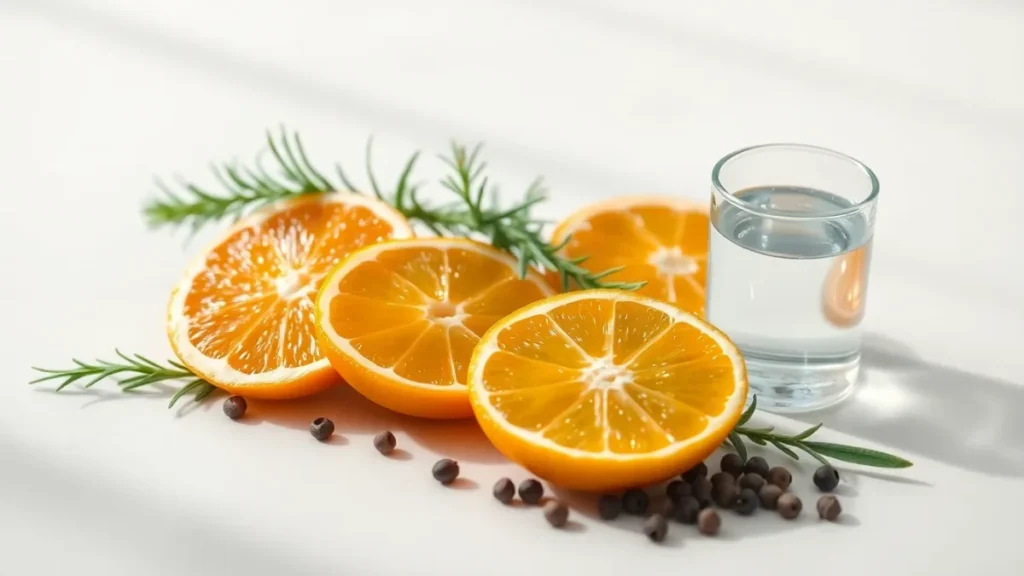
Crack open a fresh orange and you feel it before you taste anything. That bright, sharp lift in the air does something to your head. It is not your imagination, and it is not magic either. It is chemistry, and a lot of that chemistry comes down to terpenes.
Terpenes are the aroma compounds in plants. Citrus peel, pine needles, rosemary, black pepper, eucalyptus leaves, they all owe their smell to specific terpene blends. Some of those aromas read as calming. Others read as bright, clean and energising. This guide ranks the seven terpenes most associated with alertness, focus and a lifted mood.
One honest caveat up front, because most articles on this topic skip it. Most of the human evidence here comes from aromatherapy and inhaled essential oils, not from trials on single, isolated terpenes. A lot of the rest is animal or test-tube work. When you inhale rosemary oil and feel sharper, you are inhaling dozens of compounds at once, not a clean dose of one molecule. So treat the rankings below as “strongest aroma-and-mood case,” not “proven cognitive enhancers.” Where the evidence is thin, this article says so plainly.
Why some terpene aromas feel energising
When you inhale an aroma, volatile molecules hit receptors high in your nose, and those signals travel almost straight into the limbic system, the part of the brain tied to emotion and memory. A 2020 review of essential oils and their routes of intake describes how inhaled aromatics reach the brain fast and can shift mood, attention and alertness, with rosemary aroma making people more alert on memory and attention tasks while lavender slowed them down (Mukherjee et al., Int. J. Mol. Sci., 2020).
That split is the whole point. Aroma is not just pleasant background. The right one can nudge you toward focus, the wrong one toward sleep. If you want the deeper biology, our piece on the neuroscience behind terpene effects goes deeper than this piece can. For now, here are the seven worth knowing for daytime use.
1. Limonene
Limonene is the obvious number one, and it earns it. This is the terpene behind that citrus-peel hit of energy, dominant in lemon, orange, lime and grapefruit rind.
Aroma: sharp, sweet citrus. Clean and immediately uplifting.
Where it is found: citrus peels above all, plus juniper, peppermint and many bright cannabis cultivars.
What the research suggests: a 2022 review of citrus essential oils in aromatherapy found that inhaled citrus oils, where limonene is the major component, produced relaxing, mood-uplifting and cheer-enhancing effects, and noted limonene showed antidepressant-like activity in research models (Agarwal et al., Antioxidants, 2022). The mechanism appears to run through the olfactory pathway into mood-related brain regions, and in animal work limonene nudges dopamine and serotonin activity.
Honest note on evidence: the strong human data is for citrus oil blends inhaled as aromatherapy, not for pure limonene swallowed in a capsule. The antidepressant findings lean heavily on animal models. So the “limonene lifts mood” claim is well-supported as an aroma effect and promising but unproven as an isolated supplement. We go deeper in our guide to limonene effects explained.
2. Alpha-Pinene
Pinene smells exactly like it sounds. Walk into a pine forest, breathe in, and that clean, resinous sharpness is mostly alpha-pinene. It has a long reputation for clarity and alertness.
Aroma: fresh pine and rosemary, crisp and bracing.
Where it is found: pine and conifer needles, rosemary, basil, dill and many cannabis strains.
What the research suggests: a 2021 review in Frontiers in Psychiatry on pinene for brain health collected preclinical evidence that pinene improved spatial memory and learning in animal models, and that it crosses the blood-brain barrier within about 30 minutes of inhalation (Weston-Green et al., Front. Psychiatry, 2021). On paper, that is a strong case for focus.
Honest note on evidence: this is where most blogs get it wrong. The popular claim that pinene “counteracts the memory loss from THC” was tested directly in healthy adults in 2025, and it failed. Alpha-pinene did not reduce THC-induced cognitive impairment, and pinene alone produced no measurable cognitive effect at any dose tested. The authors flagged this as inconsistent with cannabis industry marketing (Spindle et al., Medical Cannabis and Cannabinoids, 2025). So the memory benefit is real in rodents and absent in the one good human trial we have. Believe the aroma-driven alertness, stay skeptical of the THC-antidote story. More in our breakdown of pinene effects.
3. Eucalyptol (1,8-Cineole)
If any terpene on this list has decent human data for alertness, it is eucalyptol. That cold, mentholated rush you get from eucalyptus oil or a strong rosemary plant is largely 1,8-cineole.
Aroma: cool, camphoraceous, medicinal-fresh. Think eucalyptus and rosemary.
Where it is found: eucalyptus, rosemary, sage, bay leaves and tea tree.
What the research suggests: a 2012 study found that the amount of 1,8-cineole absorbed into the blood after rosemary aroma exposure correlated with better performance on cognitive tasks, on both speed and accuracy (Moss and Oliver, Ther. Adv. Psychopharmacol., 2012). A separate 2020 study in Scientific Reports found eucalyptol exposure improved behavioural scores in nursing home residents (Lee et al., Sci. Rep., 2020).
Honest note on evidence: the 2012 study is a genuine human result, but the people inhaled whole rosemary oil, not pure cineole, and the cognitive gains in the nursing home study were limited. It is the best-evidenced alertness terpene here, which is not the same as proven. Still, if you want one to diffuse while you work, this is a sensible pick.
4. Terpinolene
Terpinolene is the wildcard. It is the dominant terpene in some famously heady cultivars like Jack Herer, and it tends to show up in strains people describe as bright and cerebral rather than couch-locking.
Aroma: complex and hard to pin down. Piney, floral, herbal and faintly citrusy all at once.
Where it is found: nutmeg, tea tree, apples, cumin, lilac and various cannabis strains.
What the research suggests: terpinolene appears in the scientific literature mostly for antioxidant and anti-inflammatory activity. A 2022 review of terpenoids in animal models of psychiatric disorders groups it among the terpenes that modulate oxidative stress and inflammation (Kumar et al., Antioxidants, 2022).
Honest note on evidence: this is thin. That review does not detail any specific terpinolene study on mood, focus or energy, it just lists it among antioxidant terpenes. The “bright, alert” reputation comes largely from the strains it appears in and from user reports, not from clean terpinolene trials. Treat its energising reputation as plausible and aroma-led, not established.
5. Beta-Caryophyllene
Beta-caryophyllene is the odd one out, and the most interesting. It is the only terpene known to bind a cannabinoid receptor directly, which gives it a more credible biological route to affecting mood than aroma alone.
Aroma: warm, spicy, peppery, a little woody. The bite you get from black pepper.
Where it is found: black pepper, cloves, cinnamon, hops and many cannabis varieties.
What the research suggests: a 2024 review in the International Journal of Molecular Sciences explains that beta-caryophyllene is a selective agonist at the CB2 receptor with no intoxicating effect, and that activating CB2 produces antidepressant and anxiolytic effects across animal studies (Scandiffio et al., Int. J. Mol. Sci., 2024). For mood specifically, that mechanism is one of the more compelling on this list.
Honest note on evidence: the review is blunt that no clinical trials have tested CB2-dependent effects of beta-caryophyllene on anxiety or depression in people. The mood benefit is mechanistically plausible and consistent in rodents, but human proof for mood is essentially absent. It belongs here for its stabilising, mood-supporting reputation rather than as a stimulant.
6. Ocimene
Ocimene brings a different kind of brightness. It is sweet and herbaceous, and it shows up in cultivars people reach for when they want something light and uplifting rather than heavy.
Aroma: sweet, fresh, woody-herbal with a hint of citrus. Almost like crushed mint and parsley.
Where it is found: mint, parsley, basil, orchids, mangoes and hops.
What the research suggests: ocimene is documented in plant science mainly for anti-inflammatory, antifungal and antioxidant activity, and as a major floral and foliar volatile. Its place on energy-and-mood lists rests on its bright aroma profile and the strains it appears in.
Honest note on evidence: this is the weakest-evidenced entry by some distance. There is no meaningful human research on ocimene for energy, focus or mood. It is here because the aroma reads as fresh and uplifting and because it is common in cultivars described that way, not because of clinical data. If a product page makes firm claims about ocimene boosting your focus, that claim is running well ahead of the science.
7. Valencene
Valencene rounds out the list on aroma alone, and it is a fitting one to finish with. It is named after the Valencia orange, and it smells like it.
Aroma: sweet, fresh orange and grapefruit with a soft woody edge.
Where it is found: Valencia oranges and other citrus, plus a handful of cannabis cultivars. Chemically it is a sesquiterpene (C15H24), confirmed in the PubChem compound database (CID 9855795).
What the research suggests: early work points to anti-inflammatory and possible neuroprotective activity, mostly in cell and animal models. Like its citrus cousin limonene, its bright, sweet-orange aroma is the main reason it lands on uplift lists.
Honest note on evidence: there are no human trials linking valencene to energy, focus or mood. Its uplifting reputation is an aroma association with citrus, which is reasonable but not proof. Enjoy it for the smell and the freshness, and keep your expectations modest.
How to actually use these terpenes
You do not need to extract anything in a lab to get the aroma benefit. The fastest route is the one with the most human evidence behind it: inhalation. The 2020 routes-of-intake review found inhalation engages the olfactory system most directly and acts within seconds (Mukherjee et al., 2020). Here is a simple, sensible way to put this into practice.
- Start with the aroma, not a dose. Diffuse rosemary or eucalyptus oil while you work for the eucalyptol-and-pinene alertness lift, or keep citrus peel nearby for limonene.
- Match the terpene to the time of day. Limonene, pinene and eucalyptol suit mornings and focused work. Beta-caryophyllene leans more toward steady, calm mood than stimulation.
- If using cannabis or hemp products, read the terpene report. A bright daytime experience usually tracks with limonene, pinene and terpinolene up top. Our guide to the effects of common terpenes helps decode a label.
- Go low and slow. Concentrated terpenes are potent and can irritate skin and airways. Never apply them neat, and dilute properly in a carrier.
- Try blends, not just isolates. Most human evidence is for full aromatic mixtures, which is part of why thoughtfully built blends can outperform a single terpene. Citrus-forward, uplift-oriented formulations like the Citrus Dream blend from Entour™ lean into exactly this limonene-and-valencene brightness.
If you vape, the terpene profile in your product matters even more, since heat changes how these compounds behave. Our guide to the best terpenes for vaping covers that side.
Frequently asked questions
Can terpenes really give you energy like caffeine?
Not in the same way. Caffeine is a direct stimulant with strong, well-documented human effects. Energising terpenes mostly work through aroma and mood, making you feel more alert and brighter rather than chemically stimulated. The effect is real but gentler, and the human evidence is mostly from inhaled aromatherapy rather than isolated terpene doses.
Which single terpene is best for focus?
If you want the one with the most actual human evidence, eucalyptol (1,8-cineole) is the strongest pick, since absorbed cineole from rosemary aroma has been linked to better cognitive task performance. Pinene has the best reputation but the most disappointing recent human trial, so manage your expectations there.
Does pinene cancel out THC’s effect on memory?
Probably not, based on the best current evidence. A 2025 human study found alpha-pinene did not reduce THC-induced memory impairment, even at doses far above what is naturally in cannabis. The idea comes from older animal work and has become a marketing claim that the human data does not yet support.
Are energising terpenes safe to use?
Used sensibly as aromas, the terpenes here are generally well tolerated. Problems usually come from misuse, applying concentrated terpenes directly to skin, ingesting large amounts, or inhaling irritating concentrations. Always dilute, follow product guidance, and check with a clinician if you are pregnant, breastfeeding or managing a health condition.