


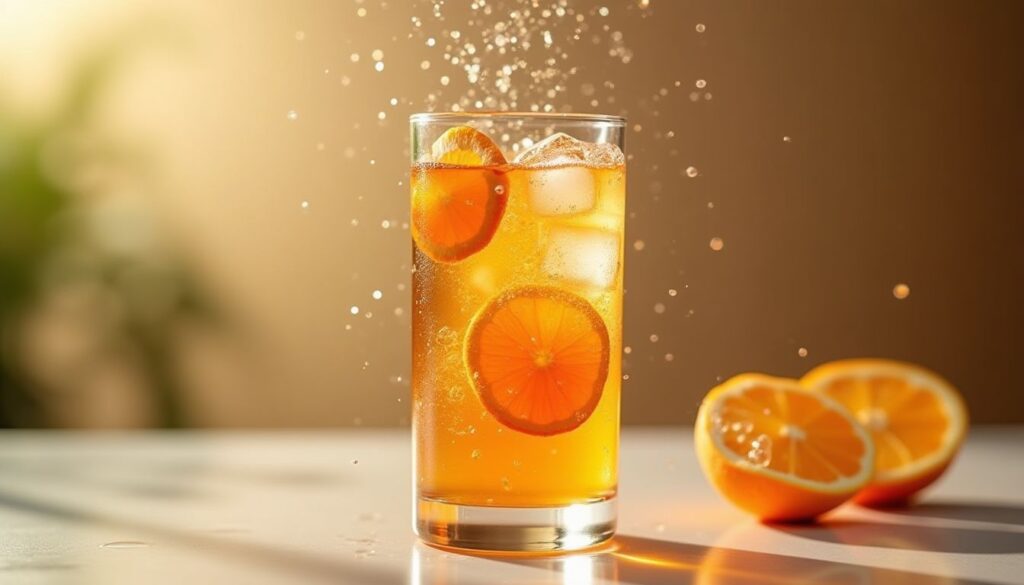
Oil and water don’t mix. That old kitchen truth is the whole problem in a sentence, and it’s the thing every beverage formulator runs into the moment they try to put terpenes into a can of seltzer. Terpenes are oils. Beverages are mostly water. Left to their own devices, those terpenes will float to the top, cling to the walls of the container, or ghost you entirely by evaporating before the drink ever reaches a shelf.
Get the chemistry right, though, and terpenes give a beverage something synthetic flavor houses struggle to fake: a bright, layered, plant-true aroma that reads as real. This is a practical look at how cannabis beverage formulation actually works when terpenes are involved, from solubility mechanics to flavor design, stability, dosing, and what to test before you commit to a production run.
Why terpenes fight water in the first place
Terpenes are lipophilic. They’re happiest dissolved in oils, fats, and alcohols, and they actively avoid water. Drop a few microliters of limonene or linalool straight into a batch of flavored water and you’ll watch them bead up and separate almost immediately.
That separation isn’t just cosmetic. It wrecks dose uniformity, because the terpene concentration at the top of the can is nothing like the bottom. It also accelerates flavor loss, since exposed terpene droplets oxidize and off-gas faster than dispersed ones. And it looks bad, which for a consumer product is often the dealbreaker before anyone even takes a sip.
So the real work isn’t adding terpenes to a drink. It’s getting them to stay evenly suspended, taste right, and hold up for the length of a shelf life. That comes down to how you solubilize them.
The solubility approaches that actually work
There’s no single correct method. The right one depends on your beverage type, your clarity target, your equipment, and your budget. Here’s how the common approaches compare.
| Approach | How it works | Typical clarity | Best fit |
|---|---|---|---|
| Standard emulsion | Terpene oil droplets stabilized in water with emulsifiers, usually 1 micron or larger | Cloudy to opaque | Juices, cloudy sodas, smoothies |
| Nano-emulsion | High-shear or ultrasonic processing shrinks droplets to roughly 20 to 200 nanometers | Clear to slightly hazy | Clear seltzers, functional waters |
| Water-soluble / aqueous-dispersible systems | Terpenes pre-formulated with carriers to disperse readily on contact with water | Clear to slightly hazy | Fast production, minimal equipment |
| Solubilizers | Surfactants like polysorbate 80 that carry terpenes into solution | Clear at low load | Low-dose flavor accents |
Nano-emulsions tend to get the most attention because smaller droplets scatter less light, which is how you keep a seltzer looking crystal clear. Smaller droplets also settle more slowly and often taste more intense per milligram, since more surface area is exposed to the palate.
The tradeoff is process. Nano-emulsions typically need high-pressure homogenization or ultrasonic equipment and careful surfactant selection, and pushing droplets too small can strip out mouthfeel or introduce a soapy edge from over-surfactanting. Pre-formulated aqueous-dispersible terpene systems exist precisely so smaller teams can skip most of that step, which is a big part of the appeal in terpene formulation for beverages where R&D bandwidth is limited.
Designing flavor, not just adding it
Terpenes aren’t a flavor on their own so much as a set of aromatic tools. Limonene reads citrusy and bright. Linalool is floral and soft. Myrcene leans earthy and slightly musky. Pinene is sharp and resinous. Beta-caryophyllene brings a peppery, spicy warmth. Blend them and you’re building an aroma profile, not flipping a switch.
The critical thing to understand is that most flavor perception happens in the nose, through retronasal aroma, not the tongue. Terpenes are volatile, so they carry that aromatic top note that makes a drink smell like actual fruit or herb rather than candy. That’s the payoff. The risk is that some terpenes turn bitter or harsh at higher concentrations, and a few carry a resinous or “green” quality that reads as medicinal if you overdo it.
A few working rules formulators tend to land on:
- Start low. Terpene inclusion in finished beverages is often in the low parts-per-million range. A little goes a long way, and the gap between “beautifully aromatic” and “smells like cleaning product” can be tiny.
- Balance top and base notes. Volatile terpenes like limonene hit first and fade fast. Heavier ones linger. Layering them gives an aroma that evolves rather than flashing and vanishing.
- Watch pH interactions. Acidic beverages can shift how certain terpenes read on the palate and can nudge some toward bitterness.
- Taste in the finished matrix. A blend that sings in a beaker of water can fall apart once sweeteners, acids, and carbonation enter the picture.
Keeping it stable on the shelf
A beverage that tastes perfect on bottling day and separates two weeks later is a failed formulation. Stability is where a lot of promising terpene drinks quietly die.
The common failure modes are worth naming so you can watch for them:
- Creaming and ringing. Oil droplets migrate upward and form a visible ring at the neck of the bottle. Smaller, well-stabilized droplets resist this; large or poorly emulsified ones don’t.
- Cloudiness or haze developing over time. Often a sign the emulsion is destabilizing and droplets are coalescing into larger, more light-scattering ones.
- Flavor fade. Terpenes oxidize and volatilize. Over months, the bright top notes dull first, which is why a drink can taste flat well before its expiry date.
- Sedimentation. Carrier or particulate material dropping out to the bottom.
Things that help: tighter droplet size distribution, appropriate emulsifier load, protecting against oxygen and light, and holding realistic pH and temperature ranges. Accelerated stability testing, where samples sit at elevated temperatures to simulate aging, gives you an early read before you gamble on a full production batch. None of this is optional if you want a shelf life measured in months rather than days.
Dosing precision and evenness
In cannabis and functional beverages, dose consistency isn’t just a quality metric. It’s a compliance and safety issue. If terpene or active concentration drifts between the first can off the line and the last, you have a real problem.
Even dispersion is the foundation here. If the emulsion is stable and uniform, every serving pulls from the same evenly mixed pool. If it’s separating, dosing goes out the window no matter how precise your metering equipment is. This is another argument for smaller, more stable droplet systems: they simply stay put.
A sensible sequence for tightening dosing precision:
- Lock in a stable emulsion or dispersion first, before worrying about exact target numbers.
- Verify uniformity across a batch by sampling top, middle, and bottom of a container.
- Test the same across multiple containers from one production run.
- Confirm the dose holds over the intended shelf life, not just at day zero.
- Re-check after any change to carbonation, sweetener, or acid, since each can shift emulsion behavior.
Analytical verification matters here. Sourcing terpenes from suppliers who provide GC-MS data, like the analysis behind Entour’s formulations through True To Plant, gives you a known starting composition, which makes it far easier to trace whether a dosing drift is coming from the ingredient or the process.
Matching terpene profiles to beverage type
The same terpene blend won’t serve a crisp seltzer and a bittersweet functional tonic equally well. Profile selection should follow the beverage’s job.
| Beverage type | Profile direction | Terpenes that tend to fit | Formulation priority |
|---|---|---|---|
| Clear seltzer | Bright, clean, citrus-forward | Limonene, pinene, terpinolene | Clarity and low haze |
| Functional / wellness drink | Earthy, calming, grounded | Linalool, myrcene, beta-caryophyllene | Flavor masking of actives |
| Mocktail / craft soda | Complex, botanical, layered | Blended top and base notes | Aroma depth and mouthfeel |
| Sparkling water accent | Subtle, aromatic lift | Low-dose limonene or pinene | Restraint and evenness |
Functional drinks are often the hardest, because you’re frequently using terpenes partly to mask the taste of the actives underneath. That’s a different design goal than making a seltzer smell like fresh grapefruit, and it usually calls for heavier, rounder terpenes rather than sharp volatile ones.
Sourcing and what to test before you scale
Where your terpenes come from shapes everything downstream. Composition consistency, purity, and format all determine how a formulation behaves and whether batch two matches batch one.
A few things worth confirming with any supplier before you build a formula around their material:
- Analytical documentation. Look for GC-MS profiles and a certificate of analysis, so you know exactly what’s in the bottle rather than trusting a label.
- Manufacturing standards. cGMP-level production signals batch-to-batch consistency, which matters enormously once you’re producing at volume.
- Beverage-ready formats. Ask whether water-soluble or aqueous-dispersible versions exist. Starting from a beverage-compatible base saves weeks of emulsion trial and error.
- Formulation support. Suppliers with in-house formulation science, like Entour’s team led by Dr. Jeffrey Raber, can help match a profile to your matrix instead of leaving you to guess.
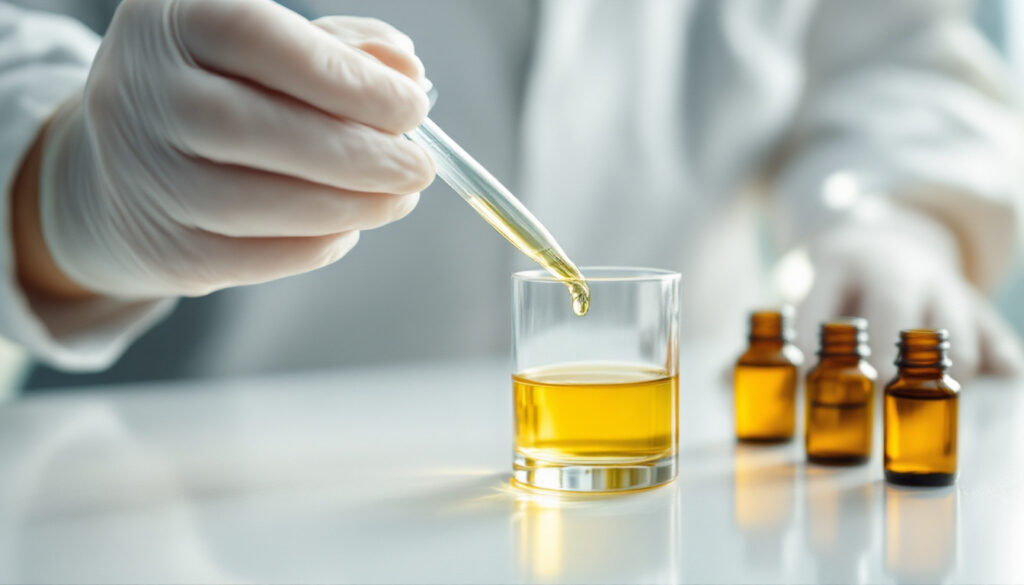
Then test properly before scaling. Run small bench batches in your actual beverage, not in plain water. Check clarity, taste, and separation at day zero, then again after accelerated aging. Confirm dose evenness. Sample multiple formats side by side. The cheapest way to do this is to request water-soluble and beverage-compatible samples for testing before committing to anything, since a small evaluation round catches most problems long before they reach a production line.
Bringing it together
Terpenes in beverages come down to a chain of decisions that all connect: choose a solubility method that matches your clarity and equipment, design an aroma profile that fits the drink’s purpose, engineer for stability so it survives the shelf, and verify dose evenness at every step. Skip any link and the whole thing wobbles.
The brands that get this right treat terpene formulation as R&D, not as a flavor dump at the end of the batch. If you’re building a terpene-forward beverage and want to shortcut the emulsion guesswork, the smart first move is to source beverage-compatible terpenes with real analytical backing and put them through your own bench testing. Start with samples, test in your actual matrix, and let the data tell you what to scale.