




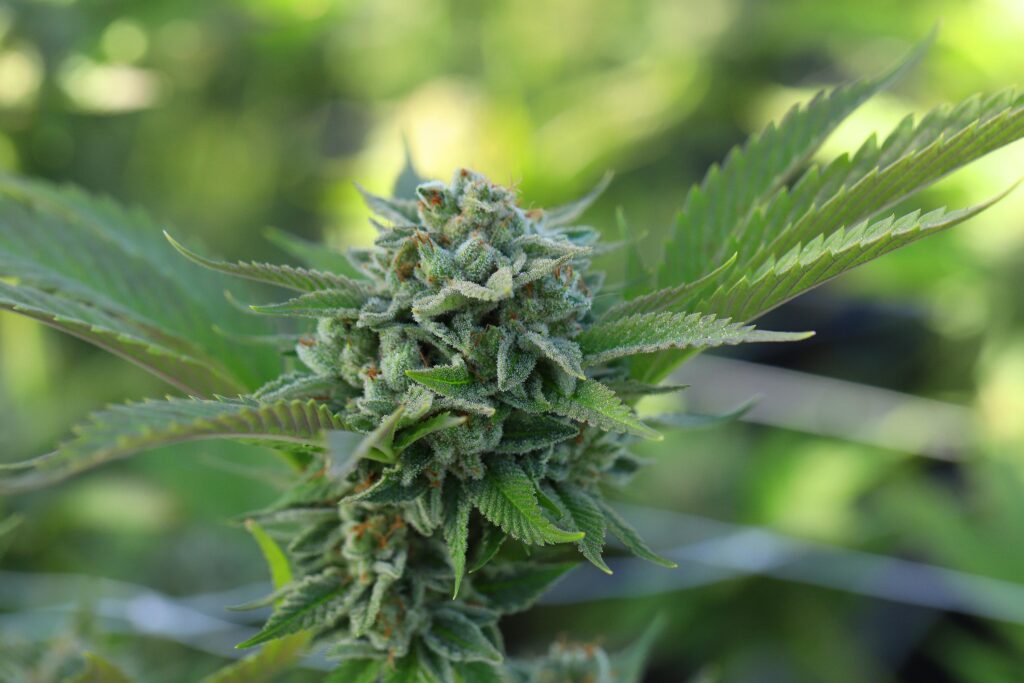
There is a specific kind of dread that comes with finding bud rot in your cannabis crop. You have spent weeks, maybe months, dialing in your environment, feeding on schedule, monitoring trichomes, counting down to harvest. And then, tucked into the heart of your biggest, most beautiful cola, you find it: a soft, gray, collapsing mass where there should be dense, resinous flower. Botrytis cinerea. The silent killer of cannabis crops worldwide.
Gray mold does not care how well you have been doing everything else. It is opportunistic, ruthless, and surprisingly fast-moving once it gets a foothold. But here is the thing: it is also predictable. It has requirements that we understand well, and that means we can fight it intelligently if we know what we are actually dealing with.
What Is Botrytis cinerea?
Botrytis cinerea is a necrotrophic fungal pathogen, which is a fancy way of saying it kills plant tissue and then feeds on the dead matter. Unlike some pathogens that try to coexist with the host, botrytis is not interested in a long-term relationship. It infects, colonizes, kills, and spreads. Rinse and repeat.
It is called gray mold because of the characteristic gray, fluffy sporulation that appears on infected tissue. In cannabis, it is most commonly referred to as “bud rot” because dense, moisture-retaining flower buds are its preferred target. However, botrytis also infects stems, leaves, and even seeds. Any part of the plant that retains moisture under the right conditions is vulnerable.
Botrytis is not unique to cannabis. It attacks over 200 plant species including grapes, strawberries, tomatoes, and roses. The USDA Agricultural Research Service has studied Botrytis cinerea extensively across horticultural crops, and the fundamental biology is the same regardless of what plant it is infecting. That body of research is directly applicable to cannabis cultivation and informs many of the prevention strategies we use today.
How Botrytis Spreads and Infects Cannabis
Botrytis spreads primarily through airborne spores. A single infection site can release millions of spores that travel through your grow space on air currents, sticking to surfaces, tools, clothing, and plant tissue. This is why botrytis outbreaks in a grow room can go from one plant to catastrophic in a matter of days if conditions are right.
The spores germinate and infect plant tissue when they encounter:
- Relative humidity above 70%, with most rapid infection occurring above 85%
- Temperatures between 59°F and 77°F (15°C to 25°C), with peak germination around 65°F to 70°F
- Damaged or senescent (dying) plant tissue, which is easier to penetrate than healthy tissue
- Standing water on plant surfaces from condensation, overwatering, or poor airflow
In cannabis specifically, botrytis exploits the dense architecture of mature buds. Deep inside a large cola, humidity can be 20 to 30 percentage points higher than the ambient environment of the room. The outer layer of the bud looks and feels normal while the interior is already being consumed. By the time gray fuzz appears on the outside, the infection has typically progressed significantly inward.
Identifying Botrytis in Cannabis: What to Look For
Early detection is everything with botrytis. The sooner you catch it, the more of your crop you can save. Here are the visual indicators at different stages of infection:
Early Stage Signs
- Single leaves within a cola suddenly yellowing and wilting without obvious cause
- Small patches of brown or purple discoloration appearing on bud tissue
- Buds that feel slightly soft or spongy when gently squeezed rather than firm and springy
- A faint musty odor that is distinct from the plant’s normal terpene profile
Mid-Stage Signs
- Visible grayish-brown discoloration spreading through bud tissue
- Wilting of multiple leaves around a single bud site
- Buds beginning to collapse or show visible necrosis (dead, darkened tissue)
- Fine, web-like fungal threads visible when a suspect bud is broken open
Advanced Stage Signs
- Gray, fuzzy sporulation on the surface of infected buds (the classic gray mold appearance)
- Entire bud sections that are soft, mushy, and dark brown or gray
- Strong musty odor across the affected area
- Rapid spread to surrounding buds and plants
Understanding the normal cannabis bud structure makes early detection significantly easier because you immediately recognize when something is wrong with the architecture of a bud rather than mistaking early infection for normal senescence.
Which Cannabis Strains Are Most Susceptible?
Not all cannabis strains are equally vulnerable to botrytis, and this is a factor that deserves serious consideration at the strain selection stage if you grow in a high-humidity environment.
Dense, tightly packed indica-dominant strains and their hybrids tend to be most susceptible because their compact bud structure creates the moisture-trapping microclimate that botrytis loves. Heavy-yielding strains with large, thick colas are particularly at risk. Conversely, sativa-dominant strains with airier, more open bud structures tend to be more resistant because airflow can penetrate deeper into the flower.
Some breeders have specifically developed botrytis-resistant varieties, particularly for outdoor cultivation in humid climates. If you are growing in an environment where humidity control is a consistent challenge, strain selection is as important as any environmental intervention you can make. In my opinion, growers operating in naturally humid regions are dramatically underestimating how much strain selection affects their botrytis risk relative to all the environmental control they invest in.
Environmental Prevention: Controlling the Conditions Botrytis Needs
Botrytis cannot establish itself without specific environmental conditions. Control those conditions and you dramatically reduce your risk.
Humidity Management
During flowering, keep relative humidity between 40% and 50%. This is the single most important factor. Below 50% RH, botrytis spore germination is significantly impaired. Above 70%, you are essentially rolling out a welcome mat. If your grow space runs naturally humid, invest in a quality dehumidifier with enough capacity for your space and run it consistently, not just when it feels humid. By the time you notice it feels humid, you may already be in the danger zone.
Monitor humidity with a calibrated hygrometer at canopy level, not at the wall. The temperature and humidity at the wall of your grow space can be meaningfully different from what your plants are actually experiencing.
Airflow and Air Circulation
Stagnant air is botrytis’s best friend. Continuous air movement through and around your canopy disrupts the moisture boundary layer that forms on plant surfaces, reducing the time that water sits on tissue and making it harder for spores to germinate after landing.
Use oscillating fans to create gentle, constant movement across your canopy. Avoid pointing fans directly at plants at high speed (wind stress is a real thing), but keep air moving consistently. Make sure your extraction system is pulling enough air through the space to completely exchange the air volume every 1 to 3 minutes during lights-on hours.
Temperature Management
Botrytis is most active between 65°F and 70°F. While this overlaps with the preferred temperature range for cannabis, the key is avoiding large temperature swings between lights-on and lights-off periods. When temperature drops sharply, relative humidity rises sharply because cooler air holds less moisture. A 10 degree temperature drop can push RH from 50% to 70% or higher. Minimize day-to-night temperature differentials, especially during late flowering.
Canopy Management and Defoliation
Dense, unmanaged canopies with overlapping branches and leaves create pockets of stagnant air and trapped moisture. Strategic defoliation during vegetative and early flowering stages improves airflow significantly. The goal is not to strip the plant bare but to ensure that air can move freely through and around every bud site.
Remove fan leaves that are pressed flat against developing buds or that are creating shade and moisture pockets. This is especially important for high-density growing methods like SCROG (Screen of Green), where the horizontal canopy can trap humidity if not actively managed.
How to Handle a Botrytis Outbreak
If you find botrytis in your grow, the response needs to be fast and surgical. Here is the protocol:
- Do not handle infected plant material without protection. Wear gloves and ideally a mask. When you touch infected tissue, you pick up spores and carry them to every other surface you subsequently touch.
- Isolate the infected plant immediately if possible, or at minimum quarantine the infected section.
- Remove infected tissue with clean, sharp scissors. Cut at least 4 to 6 inches below the visible infection boundary because the fungus travels through the plant faster than visible symptoms appear.
- Seal removed material in a plastic bag immediately. Do not carry it through your grow space uncovered.
- Sanitize all tools and surfaces that came into contact with infected material using a solution of 10% bleach or commercial fungicide.
- Aggressively reduce humidity in the remaining space. Drop RH to 40 to 45% and increase airflow immediately.
- Inspect surrounding plants daily for the next week to catch any secondary spread.
If the infection is widespread across multiple plants close to harvest, you may need to make the difficult decision to harvest early. An early harvest of mildly affected plants recovers something. Waiting and losing the entire crop recovers nothing. Partially mature cannabis is not ideal, but it is infinitely better than fully mature botrytis.
Biocontrol and Fungicide Options
For growers in legal cannabis jurisdictions, several biocontrol and fungicide options are registered for use on cannabis and have demonstrated efficacy against botrytis. It is worth checking your specific state or provincial regulations, as what is permitted varies significantly by market.
Bacillus subtilis-based products (such as Serenade) are widely used organic biocontrol agents that colonize plant surfaces and inhibit botrytis spore germination. They work best as preventatives applied before infection rather than as curative treatments after infection is established. The EPA has registered Bacillus subtilis as a biopesticide and considers it a reduced-risk option, which matters in regulated cannabis markets where residue testing is standard.
Potassium bicarbonate is another low-risk option that alters surface pH and creates conditions hostile to botrytis. Applied as a foliar spray during vegetative and early flowering, it is a reasonable preventative in high-risk environments.
Hydrogen peroxide at appropriate dilutions can help sanitize surfaces and treat minor topical infections, but it is not a substitute for environmental control.
The Financial Reality of Botrytis Outbreaks
Let me put some numbers to this because botrytis is often treated as a nuisance rather than the serious economic threat it is. A single botrytis outbreak in a commercial indoor cultivation facility, if not caught early, can destroy 10 to 40% of a harvest in 72 to 96 hours under favorable conditions. In a facility producing 50 pounds of flower per harvest, that is 5 to 20 pounds of product lost, representing losses of tens of thousands of dollars depending on market pricing.
The cost of proper humidity control, adequate ventilation, and routine preventative biocontrol is a small fraction of that potential loss. This is, in my view, one of the clearest return on investment calculations in cannabis cultivation. Environmental control is not optional infrastructure. It is crop insurance.
Staying informed about your cannabis plant health in general creates the baseline awareness that makes botrytis detection faster. You notice something is wrong sooner when you are actively monitoring rather than only checking when something looks dramatically bad.
Final Thoughts
Botrytis cinerea is a formidable pathogen, but it is not unbeatable. It has predictable requirements that we can work against systematically. Humidity control, airflow management, strategic canopy management, smart strain selection, early detection routines, and appropriate biocontrol options give growers a comprehensive toolkit for preventing, detecting, and managing gray mold.
The growers who lose entire harvests to botrytis are almost always the ones who assumed it would not happen to them. The ones who consistently avoid catastrophic losses are the ones who treat botrytis prevention as non-negotiable, routine infrastructure rather than something they address after the fact. Prevention is not pessimism. It is just good cultivation practice.