



Walk down the skincare aisle in 2026 and you will see the word terpenes on jars that have nothing to do with cannabis. Botanical serums, calming balms, beard oils, deodorants. Brands love terpenes because they do two jobs at once: they smell like a plant and they may do something useful to the skin.
That second part is where things get interesting, and where a lot of the marketing runs ahead of the science. Terpenes in skincare is now a genuine formulation trend, not a fad, but the evidence behind the claims is uneven. Some of it is solid. Some of it is a single mouse study being stretched into a face-cream headline.
This guide walks through why cosmetic chemists are reaching for terpenes, which ones matter, what the research supports, and the safety side that almost nobody on the marketing side wants to talk about. If you want the broader picture first, our overview of terpenes and their effects is a good companion read.
What are terpenes doing in a skincare product?
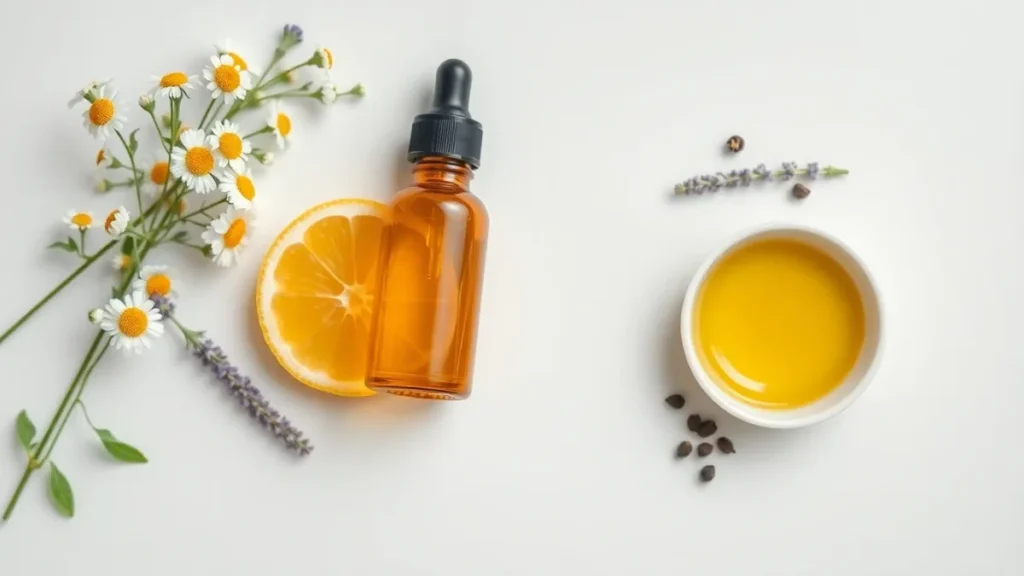
Terpenes are the aromatic compounds that give plants their smell. Pine resin, lemon peel, lavender, chamomile, black pepper. The scent is the terpenes talking. They evolved in plants partly as chemical defence, which is why so many of them show antimicrobial or antioxidant behaviour in a lab dish.
In a cosmetic, terpenes earn their place for a few overlapping reasons:
- Natural fragrance. Terpenes are the reason a balm can smell like citrus or fir without a synthetic perfume blend on the label. For brands selling a natural or clean positioning, that matters.
- Skin-relevant activity. Various terpenes show anti-inflammatory, antioxidant and antimicrobial effects in research, which maps onto the things skincare buyers care about: redness, ageing, blemishes.
- Penetration enhancement. Some terpenes help other ingredients cross the skin barrier, so they are used as functional helpers, not just for scent or activity.
That trio is the whole pitch. The honest caveat, which we will keep coming back to, is that most of the skin-benefit research is in-vitro (cells in a dish) or preclinical (animal models), not large human trials on finished cosmetics. The mechanisms are real and promising. The clinical proof on your specific moisturiser usually is not there yet.
Terpenes as natural fragrance and penetration enhancers
The least controversial reason terpenes are in your products is also the simplest: they smell good and they are naturally derived. A formulator can scent a product with limonene or linalool instead of a synthetic fragrance accord, which fits the clean-beauty story shoppers are buying.
The more technical reason is penetration enhancement. This is well studied because the pharmaceutical world has been using terpenes to push drugs through skin for decades. A 2016 review of natural terpenes as penetration enhancers for transdermal drug delivery explains the main mechanism: terpenes interact with the lipids in the stratum corneum, the skin’s outer barrier, fluidising and partly extracting them so molecules can pass more easily. The same review notes that several terpenes carry GRAS (Generally Recognized As Safe) status and tend to have relatively low irritancy compared with synthetic enhancers like azone.
A mechanistic review titled Percutaneous Permeation Enhancement by Terpenes adds detail: smaller, more lipophilic terpenes such as limonene and terpineol disrupt and extract the ordered lipid bilayer of the stratum corneum, which is what lowers the barrier to other actives. In practice this means a terpene in your serum is not always there for its own benefits. Sometimes it is there to help your vitamin C or retinoid get where it needs to go.
That cuts both ways. Better penetration of a good active is helpful. Better penetration of an irritant, or of the terpene’s own oxidation products, is not. Hold that thought.
The key terpenes used on skin, and what the evidence says
Not all terpenes are interchangeable. Here are the ones that actually turn up in cosmetic formulation, and an honest read on each.
Bisabolol: the soothing one with the best skincare track record
If one terpene has earned its skincare reputation, it is alpha-bisabolol. It is the main soothing component of German chamomile and has been used in cosmetics for years specifically as an anti-irritant.
A detailed review of the pharmacological effects and therapeutic potential of alpha-bisabolol reports that its anti-inflammatory action runs through inhibition of NF-kB signalling, and that topical alpha-bisabolol markedly reduced pro-inflammatory cytokines in TPA-induced skin inflammation in mice. The same review notes it is widely used in cosmetic formulations thanks to documented dermal absorption and an absence of dermal irritation or photosensitivity. That last part is the key reason formulators trust it on sensitive skin.
The broader case for chamomile-derived ingredients is covered in a comprehensive review of chamomile’s therapeutic applications, which describes its anti-inflammatory and wound-healing uses and confirms alpha-bisabolol as one of the principal sesquiterpenes in the oil. Still preclinical-heavy, but bisabolol is about as well-supported as cosmetic terpenes get.
Beta-caryophyllene: the anti-inflammatory with a receptor story
Beta-caryophyllene is the peppery terpene in black pepper, cloves and copaiba. It is unusual because it binds the CB2 cannabinoid receptor, which is part of why it shows consistent anti-inflammatory behaviour.
A 2025 review of topical beta-caryophyllene for dermatologic disorders describes CB2-mediated anti-inflammatory, antipruritic, antioxidant and reparative actions on skin, including effects on NF-kB and Nrf2 pathways. It is a good example of strong mechanism and weak human proof. The authors are blunt that no drug-quality human evidence exists for purified, dose-defined beta-caryophyllene, and that the available clinical signals come from multi-ingredient botanicals like copaiba rather than the isolated terpene. Promising, not proven. To see how this fits with cannabis-context terpenes, our guide to therapeutic terpenes covers the wider research landscape.
Limonene and linalool: lovely aroma, real sensitisation risk
Limonene (citrus) and linalool (lavender, coriander) are two of the most common terpenes in scented cosmetics. They smell great, they show antioxidant activity in the lab, and limonene is a capable penetration enhancer. They are also two of the more troublesome ingredients on a skin label, for reasons covered in the safety section below. We dig into the citrus terpene specifically in our explainer on limonene’s effects.
Terpineol, geraniol and the supporting cast
Terpineol shows up as both a penetration enhancer and a mild anti-inflammatory and antimicrobial agent. Geraniol (the rose-like note in geranium and citronella) brings antimicrobial and antioxidant activity and is used as a natural fragrance component. Both are useful, and both are also on the fragrance-allergen watch list, which is the recurring theme with aromatic terpenes: the same volatility that makes them smell good makes them reactive.
The safety side nobody markets: oxidised terpenes and contact allergy
This is the section most skincare blogs skip, and it is the most important one if you are formulating or shopping carefully.
Many fragrance terpenes are what dermatologists call prehaptens. Fresh out of the bottle they are barely allergenic. But on exposure to air they oxidise, and the oxidation products, especially hydroperoxides, are potent skin sensitisers. The European Commission’s scientific information on how fragrance substances become skin allergens spells it out: oxidation products of limonene, linalool, geraniol and linalyl acetate have been identified as potent sensitisers, while the non-oxidised parent compounds rarely cause reactions.
This is not a niche concern. A consecutive patch-test study on contact sensitisation to hydroperoxides of limonene and linalool found that among 821 patients tested, 9.4% reacted to limonene hydroperoxides and 11.7% to linalool hydroperoxides, with a large share of those reactions judged clinically relevant. That is why both oxidised limonene and oxidised linalool have been added to the European baseline patch-test series.
Two practical consequences follow:
- Freshness and antioxidants matter. A terpene that has been sitting in an opened jar in a warm bathroom for a year is chemically different from the one that went in. Formulating with antioxidants and stable packaging is not optional fluff, it changes the allergen profile.
- Labelling rules exist for a reason. Under EU cosmetic rules, a defined set of fragrance allergens, including limonene, linalool, geraniol and citronellol, must be declared on the ingredient list once they exceed set thresholds. If you see those names, that is the regulation working, not a red flag in itself, but useful information if your skin reacts to fragrance.
None of this means terpenes are dangerous. It means aromatic terpenes are reactive by nature, and the dose, the freshness and the individual’s skin all matter. People with sensitive or eczema-prone skin are the ones who need to read these labels closely. If you want a deeper primer on this topic, see our piece on whether botanical terpenes are safe.
Practical guidance: formulating and reading labels
Here is how to act on all of the above, depending on which side of the jar you are on.
If you are formulating clean or natural skincare
- Lead with the gentle workhorses. For soothing and anti-irritant claims, bisabolol is the safest, best-supported terpene to build around. It pairs well with chamomile extracts and has a clean dermal-tolerance record.
- Treat aromatic terpenes as fragrance ingredients, not free actives. Limonene, linalool and geraniol are wonderful for scent, but formulate them with stabilisers and antioxidants, control the dose, and respect allergen-labelling thresholds.
- Use penetration enhancers on purpose. If you are adding a terpene to drive another active deeper, decide that deliberately and consider what else it is helping across the barrier.
- Source consistent material. Skin-grade work needs known purity and oxidation status, not just a pleasant smell. Standardised terpene blends, such as the formulations from Entour™ for topical applications, give formulators a defined starting point rather than a variable raw oil. Our guide to natural versus synthetic terpenes explains why consistency matters here.
- Do not oversell the science. Claim what the evidence supports. Soothing and antioxidant support are defensible. Curing acne or reversing wrinkles, on current data, is not.
If you are a shopper reading a label
- Seeing limonene or linalool low on an ingredient list is normal and usually fine. If your skin reacts to scented products, it is a sign to patch test first.
- Patch test any new terpene-containing product on your inner forearm for a couple of days before putting it on your face.
- Bisabolol and chamomile-based products are a sensible starting point for sensitive skin.
- Be sceptical of dramatic anti-ageing or anti-acne claims pinned on a single terpene. The mechanism may be real, the proof on the finished product usually is not.
Frequently asked questions
Are terpenes good for your skin?
Several are genuinely useful. Bisabolol has a strong soothing and anti-inflammatory profile, and various terpenes show antioxidant and antimicrobial activity in research. The caveat is that most of this evidence is preclinical or in-vitro, so think of terpenes as promising supporting ingredients rather than proven miracle actives.
Can terpenes cause skin allergies?
Yes, some can, mainly through oxidation. Limonene and linalool are low-risk when fresh, but their air-oxidation products are common contact allergens, which is why oxidised limonene and linalool sit in the European baseline patch-test series. Patch testing and well-formulated, well-packaged products reduce that risk.
Why do skincare labels list limonene and linalool?
Because EU cosmetic regulation requires a set of recognised fragrance allergens to be declared on the ingredient list above certain concentrations. It is a transparency requirement, not an automatic warning, and it helps fragrance-sensitive people avoid known triggers.
Do terpenes really help other ingredients absorb?
Yes, this is one of the better-established uses. Terpenes such as limonene and terpineol disrupt the lipid barrier of the stratum corneum, which lets co-formulated actives penetrate more easily. It is the same mechanism the pharmaceutical industry uses for transdermal drug delivery.
The honest takeaway
Terpenes in skincare are a real trend with real substance underneath, not just a buzzword on a serum box. They give brands natural fragrance, a credible set of anti-inflammatory and antioxidant mechanisms, and a proven penetration-enhancing trick.
The grown-up version of the story keeps two truths in view at once. The mechanisms are well documented, but the human proof on finished cosmetics is mostly still pending. And the same aromatic, reactive chemistry that makes terpenes appealing is exactly what makes oxidised limonene and linalool worth respecting. Formulate and shop with both of those in mind, and terpenes are a smart addition to a skincare routine rather than a marketing gamble.