




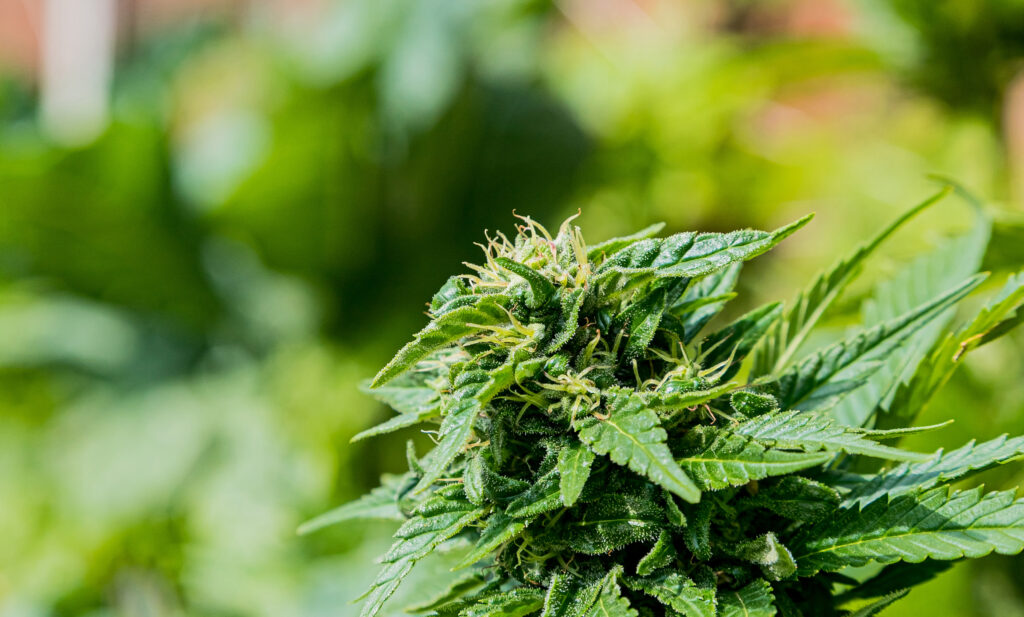
A terpene profile represents the specific blend and concentration of aromatic compounds present in cannabis, creating a chemical fingerprint unique to each cultivar. With over 150 cannabis terpenes identified in the plant, complex combinations of various concentrations can influence formulation outcomes and organoleptic characteristics.
For formulators, understanding terpene profile meaning extends beyond aroma characterization. These compound profiles drive cannabinoid synergy through the entourage effect, influence clinical relevance, and enable strain-specific replication at scale. In regulated U.S. markets, detailed terpene profiling has become foundational for product differentiation and authenticity verification. Formulators now rely on data-driven insights rather than subjective sensory evaluation to replicate cultivars like OG Kush or Sour Diesel with scientific rigor. This analytical approach transforms terpene profiles from descriptive markers into actionable formulation parameters that deliver consistent, predictable product experiences.
What Does Terpene Profile Mean?
A terpene profile identifies the distinct composition and relative abundance of volatile compounds within a cannabis sample. Think of it as a molecular signature—each cultivar expresses terpenes in ratios that distinguish Blue Dream from Granddaddy Purple at the compound level.
This biochemical fingerprint serves multiple functions beyond simple classification. Analytical platforms measure individual terpene concentrations to verify product authenticity, ensuring consumers receive the cultivar advertised on packaging.
The practical value emerges when formulators apply this data to product development. Rather than relying on subjective descriptions, quantitative terpene profiles provide reproducible benchmarks for understanding cannabis terpenes across production batches. A documented profile showing 2.1% myrcene, 0.8% limonene, and 0.3% caryophyllene becomes a quality control standard, not an approximation.
In regulated markets, this fingerprinting approach addresses a critical challenge: consistency. When terpene profiles shift between harvests, formulators can adjust extraction parameters or blending ratios to maintain product specifications. The profile transforms from botanical trivia into operational intelligence that supports scalable manufacturing and regulatory compliance.
Reading and Interpreting Terpene Profile Charts
Terpene profile charts display compound concentrations as percentage values, typically ranging from trace amounts (<0.1%) to dominant terpenes exceeding 2% of total composition. Reading these charts requires distinguishing primary compounds—those above 1% concentration from secondary terpenes that still contribute to the aromatic profile despite lower percentages.
Charts organize data either by descending concentration or alphabetically by compound name. The dominant terpene, often myrcene or limonene in cannabis cultivars, appears at the highest percentage and drives initial formulation decisions. Minor terpenes below 0.5% still warrant attention research on extraction methods demonstrates these compounds contribute to entourage effects even at minimal concentrations.
When interpreting percentage data, context matters. A chart showing 1.8% β-caryophyllene represents a potent concentration for this sesquiterpene, while 1.8% myrcene indicates moderate levels for this abundant monoterpene. Formulators should compare values against cultivar-specific benchmarks rather than absolute thresholds.
Apply chart insights to formulation strategy by identifying concentration ratios between compounds. A 3:1 myrcene-to-limonene ratio creates different organoleptic outcomes than a 1:1 balance, even when total terpene content remains constant.
For strain replication projects, chart data becomes your blueprint. Document the complete terpene composition including trace compounds below 0.3%, as these subtle variations distinguish authentic cultivar profiles from approximations.
Cannabis Terpene Profiles vs. Botanical Terpenes
Cannabis-derived terpene profiles contain both molecules found on the plant and their degradant derivatives based on processing methods used for isolation. Botanical terpenes, sourced from citrus, pine, or other plant species, provide individual compounds at high purity to intricately replicate the ratios and minor constituents found in authentic cultivar profiles.
The authenticity distinction matters for formulation outcomes. Cannabis extraction captures not just dominant terpenes like myrcene or limonene, but also sesquiterpenes and rare monoterpenes below 0.2% concentration that contribute to cannabis aromatic compounds and cannabinoid synergy. Botanical blends can exactly replicate these profiles by combining isolated compounds, yet achieving precise replication requires analyzing hundreds of molecular constituents.
Formulation implications differ significantly between sources. Cannabis-derived profiles deliver unique fidelity but face supply constraints, reproducibility concerns, and regulatory complexity. Botanical terpenes offer consistent availability and cost-effective solutions while requiring sophisticated blending protocols to match cultivar benchmarks.
Iconic Strain Profiles: Sour Diesel Terpene Composition
Sour Diesel demonstrates how terpene composition defines cultivar identity and informs formulation strategy. Lab-verified analysis reveals total terpene concentrations between 1.2% and 2.5% by dry weight, with limonene, β-caryophyllene, and myrcene establishing the compound hierarchy that delivers this strain’s characteristic profile.
Limonene dominates at concentrations frequently exceeding 1.0%, contributing to sharp citrus notes that distinguish Sour Diesel from myrcene-heavy cultivars. β-Caryophyllene appears as the secondary compound, typically ranging from 0.4% to 0.8%, while myrcene rounds out the primary trio. Secondary terpenes including pinene and humulene appear below 0.3% yet contribute essential complexity.
Effect profiles correlate directly with this terpene architecture. The elevated limonene concentration aligns with reported energizing outcomes, while caryophyllene adds depth to the compound synergy.
OG Kush Terpene Profile Analysis
OG Kush presents a balanced terpene architecture where myrcene, limonene, and β-caryophyllene appear in nearly equal concentrations. This equilibrium distinguishes OG Kush from limonene-dominant Sour Diesel or myrcene-heavy indicas.
Minor terpenes including humulene and pinene appear below 0.3% yet remain essential for authentic cultivar expression.
This balanced composition creates formulation opportunities: increasing limonene ratios slightly shifts toward energizing outcomes, while myrcene elevation enhances relaxation potential.
What Are the Three Types of Terpenes?
Terpenes classify into three structural categories based on carbon count: monoterpenes (C10), sesquiterpenes (C15), and diterpenes (C20). Each class exhibits distinct molecular characteristics that influence volatility, stability, and formulation behavior in cannabis products.
Monoterpenes include myrcene, pinene, and limonene. Sesquiterpenes include β-caryophyllene and humulene. Diterpenes appear in minimal quantities.
What Is the Mother of All Terpenes?
Isoprene—a five-carbon hydrocarbon (C₅H₈) functions as the universal building block from which all terpenes assemble.
Understanding this molecular foundation clarifies why terpenes share structural similarities despite their diverse aromatic characteristics.
What Strain Has the Highest Terpene Profile?
No single cultivar universally claims the highest terpene content. However, certain chemotypes consistently exceed 3% by dry weight, with exceptional phenotypes occasionally reaching 4–5%.
Myrcene-dominant indicas and limonene-forward sativas produce the highest terpene expressions when cultivation parameters optimize secondary metabolite production.
Concentration impacts more than aroma—studies indicate that terpene profiles between 2–8% optimize terpene–cannabinoid interactions.
Applying Terpene Profile Knowledge to Product Development
Successful formulation demands precision at the molecular level. Maintaining extraction temperatures below 120°F preserves volatile monoterpenes and cannabinoid interactions.
Profile replication requires documenting complete spectra, including trace terpenes below 0.3%. Ratio relationships between primary terpenes—not just absolute percentages—determine whether formulations maintain authentic cultivar expression.
Analytical insights become operational intelligence, guiding quality control, regulatory compliance, and consistent consumer experience.