



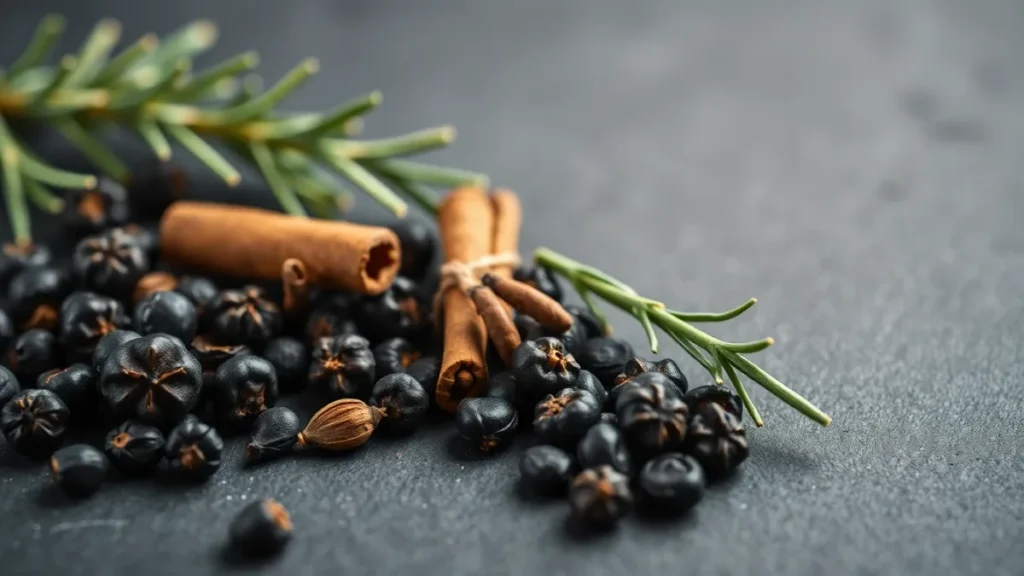
Crack open a jar of black pepper and take a sniff. That warm, spicy, slightly woody smell is mostly one molecule doing the work: beta-caryophyllene. The same compound shows up in cloves, cinnamon, hops, rosemary and, yes, cannabis.
Here is the part that makes it stand out from every other terpene on the shelf. Most terpenes nudge your biology indirectly. Beta-caryophyllene actually plugs into a cannabinoid receptor, the same kind of receptor that THC and your own internal cannabinoids talk to. That is why researchers started calling it a “dietary cannabinoid” back in 2008, and why the beta caryophyllene terpene keeps showing up in serious pharmacology papers rather than just product marketing.
Let us walk through what it is, how it works in plain English, and what the science does and does not support. Spoiler: a lot of the exciting stuff is still preclinical, and we will be honest about that.
What is beta-caryophyllene?
Beta-caryophyllene (often written as BCP or (E)-β-caryophyllene) is a sesquiterpene with the molecular formula C15H24, according to its PubChem chemical record. “Sesquiterpene” just means it is built from three five-carbon isoprene units, making it a bit larger and heavier than the smaller monoterpenes like limonene or pinene.
That size matters for how it behaves. It also has an unusual ring structure with a strained cyclobutane ring, which is partly why it can dock into a cannabinoid receptor when most terpenes cannot.
If you want a refresher on how terpenes differ from the cannabinoids people usually talk about, our guide on terpenes versus cannabinoids breaks down the categories. BCP is interesting precisely because it blurs that line.
What does beta-caryophyllene smell like?
Spicy, peppery, woody, with a faint clove and dry-wood edge. It is not citrusy or floral. If a cannabis strain smells like it has a kick of pepper or a bit of funky spice, there is a good chance BCP is part of the profile.
In flavour and fragrance work it gets used to add warmth and depth, which ties into its long history as a food and drink flavouring.
Where is beta-caryophyllene found?
This is one of the most common terpenes in the plant kingdom, which is part of why it ended up in human food for centuries. You will find meaningful amounts in:
- Black pepper, where it is one of the dominant aroma compounds
- Cloves and cinnamon
- Hops, which is why some beers carry a peppery note
- Rosemary, basil and oregano
- Cannabis, where it is frequently one of the top terpenes by concentration
Because it sits in so many everyday spices, most people have been eating beta-caryophyllene their whole lives without thinking about it. If you are curious how plants actually manufacture these compounds, the mechanics are covered in our explainer on common terpenes and their effects.
How does beta-caryophyllene work? The CB2 connection in plain English
Your body runs an internal signalling network called the endocannabinoid system. Think of it as a set of dimmer switches that help regulate inflammation, pain, mood and immune response. The two main switches are receptors called CB1 and CB2.
CB1 receptors are concentrated in the brain and nervous system. When THC hits CB1, that is what produces the classic high. CB2 receptors are mostly out in your immune cells and peripheral tissues, and activating them does not get you high.
Here is the key finding. In a 2008 study published in the Proceedings of the National Academy of Sciences, researchers showed that beta-caryophyllene selectively binds and activates the CB2 receptor, with a binding affinity (Ki) of around 155 nanomolar. They titled the paper “Beta-caryophyllene is a dietary cannabinoid,” and the name stuck.
In that same study, oral BCP at 5 mg/kg sharply reduced an inflammatory response in normal mice, but the effect vanished in mice that had been bred without CB2 receptors. That is strong evidence the anti-inflammatory action runs specifically through CB2, not some unrelated pathway.
So in plain terms: BCP behaves like a cannabinoid that only flips the non-psychoactive switch. You get the immune and inflammation signalling without the head change.
It may also work indirectly through your own endocannabinoids
The CB2 story is not the whole picture, and newer work has added a wrinkle. A 2024 study found that beta-caryophyllene also inhibits an enzyme called monoacylglycerol lipase (MAGL), which is the enzyme that breaks down one of your body’s own cannabinoids, 2-AG.
Block that enzyme and 2-AG levels rise. In that rat study, BCP raised 2-AG roughly threefold and produced pain relief. The authors propose this as a second, indirect mechanism: BCP does not just activate CB2 itself, it may also let your natural cannabinoids stick around longer. Worth noting this was an animal study, not a human trial.
What does the research say beta-caryophyllene might do?
This is where we need to be careful and specific. BCP has a genuinely promising research profile, but the overwhelming majority of it comes from cell cultures and animal models. That does not make it worthless. It does mean we should not oversell it as a proven human treatment. Here is the honest state of play.
Anti-inflammatory effects
This is the best-supported activity, and it traces straight back to the CB2 mechanism. In lab studies, BCP lowers pro-inflammatory signalling molecules like TNF-alpha, IL-6 and IL-1 beta. The 2008 mouse data above is the foundation, and a lot of later work builds on it. The catch: most of it is preclinical.
Pain relief (analgesia)
BCP has shown analgesic effects in mouse models of both inflammatory and nerve-related pain. The MAGL and 2-AG finding gives a plausible reason why. There is also a 2024 mouse study showing that beta-caryophyllene oxide combined with paracetamol produced a synergistic pain-relieving effect, meaning the two together worked better than the sum of their parts. If you want the broader picture on terpenes and pain, our review of clinical studies on terpenes and pain management puts this in context.
Anxiety and mood (anxiolytic and antidepressant)
A 2024 review on BCP in emotional and cognitive disorders pulled together the animal evidence and found antidepressant-like and anxiety-reducing effects in rodent models, including reduced anxiety in the elevated plus maze test. Crucially, the same review states plainly that no clinical trials have yet tested these CB2-dependent effects in humans. So the mood angle is promising but unproven in people.
Gastroprotective effects
In that paracetamol combination study, the BCP oxide pairing also protected the stomach lining against ethanol-induced damage in mice, offering around 59 percent gastroprotection in that model. That is interesting because long-term painkiller use can be hard on the gut, but again, this is mouse data.
Neuroprotective effects
A 2018 systematic review screened 545 articles and analysed 41 experimental studies on BCP’s effects in the nervous system. It concluded BCP shows protective potential across conditions including cerebral ischemia, neuroinflammation and Alzheimer’s-related models, driven by its antioxidant and anti-inflammatory actions. The authors were careful to frame it as “possible” application. The evidence is preclinical.
The pattern across all of these is the same. Strong mechanism, consistent animal results, very little human clinical data yet. Treat anyone claiming BCP is a proven cure for anything with healthy scepticism.
Is beta-caryophyllene safe? FDA and FEMA status
Beta-caryophyllene has a long regulatory track record as a flavouring, largely because it has been in our spice rack forever. In the United States it is listed in the FDA’s food substances database as a flavoring agent under 21 CFR 172.515, and it carries FEMA GRAS status (Generally Recognized As Safe) with FEMA number 2252.
In practical terms, that means it is permitted as a synthetic and natural flavouring substance in food, and it is used in things like spice blends and chewing gum at low concentrations. That regulatory history is reassuring for general dietary exposure. It is not the same thing as approval to treat a medical condition, and the two should not be confused.
As with any concentrated terpene, the dose makes the difference. Eating black pepper is not the same as inhaling or ingesting an isolated terpene at high concentration. If you are weighing up purity and source, our guide on whether terpenes are safe and how to choose them is a sensible starting point.
Practical notes for consumers and formulators
If you are buying or building products with beta-caryophyllene, a few things are worth keeping in mind.
- It is heat and oxidation sensitive. BCP can oxidise into caryophyllene oxide over time, especially with air and light exposure. That changes both the aroma and, potentially, the activity profile. Store it cool, dark and sealed.
- It is volatile but heavier than monoterpenes. Because it is a sesquiterpene, it has a higher boiling point than terpenes like limonene, so it behaves differently in vaping and extraction. It tends to stick around in the back end of a profile.
- Concentration is everything. The whisper of BCP in a curry is nothing like an isolate dosed into a tincture. Formulators should respect flavour thresholds (it gets sharp and soapy if overdone) and follow recognised purity standards.
- It pairs well in blends. Its peppery base plays nicely with citrus and pine notes, which is why it shows up in many engineered profiles. Curated terpene blends from Entour™ are one example of how formulators balance a spicy sesquiterpene like BCP against brighter top notes.
- Do not make medical claims. The science is genuinely interesting, but it is mostly preclinical. “May support” is honest. “Treats” is not.
FAQ
Is beta-caryophyllene psychoactive?
No. It activates the CB2 receptor, which lives mainly in immune and peripheral tissues, not the CB1 receptor in the brain that THC targets. That is why it can behave like a cannabinoid without producing a high.
Is beta-caryophyllene the only terpene that binds cannabinoid receptors?
It is the best-documented common dietary terpene that selectively binds and activates the CB2 receptor, which is what earned it the “dietary cannabinoid” label in the 2008 PNAS paper. Other compounds interact with the endocannabinoid system in different ways, but BCP’s direct CB2 agonism is unusual and well characterised.
Can you get beta-caryophyllene from food?
Yes. Black pepper, cloves, cinnamon, hops, rosemary, basil and oregano all contain it. People have been consuming it through spices for a very long time, which is part of why it has GRAS flavouring status.
Does the research mean beta-caryophyllene is a proven treatment?
Not yet. The anti-inflammatory, analgesic, anxiolytic, gastroprotective and neuroprotective findings are encouraging, but they come overwhelmingly from cell and animal studies. Human clinical trials are largely missing, so it is best thought of as a promising research compound rather than a medicine.
The bottom line
Beta-caryophyllene is the rare terpene that earns its hype on mechanism, not marketing. It smells like black pepper, sits in half your spice rack, and genuinely engages a cannabinoid receptor in a way almost no other common terpene does.
The research on inflammation, pain, mood, gut protection and the brain is real and consistent, but it is mostly preclinical. Keep that honesty in mind, store it properly if you are formulating with it, and let the science catch up before treating it as more than a fascinating, food-safe compound with serious potential.