
Monoterpenes directly influence your cultivation success and market positioning. These volatile aromatic compounds determine product differentiation in an increasingly competitive industry where high terpene cannabis commands premium pricing. To understand how these compounds shape aroma and product quality, growers often refer to foundational terpene science resources like the terpenes explained guide.
Research involving over 1,200 medical cannabis patients reveals specific monoterpene preferences tied to therapeutic outcomes. Consumers actively seek Myrcene, Limonene, and similar compounds when selecting products. This consumer demand translates to measurable market advantages for growers who optimize terpene profiles in cannabis during cultivation ,a topic explored further in this cannabis terpene guide.
Your growing environment and post-harvest protocols significantly impact monoterpene retention. Studies confirm that elevated humidity during storage degrades these compounds rapidly, reducing product value. Environmental controls throughout the growth cycle and curing process preserve aromatic integrity.
Monoterpene analysis also provides authentication value. Stereochemical profiling through chiral gas chromatography distinguishes genuine cannabis genetics from synthetic alternatives, protecting your brand reputation. Clear science behind every aroma means understanding how cultivation decisions affect these compounds.
Growers who monitor and optimize monoterpene production achieve consistent cannabinoid profiles, enhanced consumer satisfaction, and stronger product differentiation. Your cultivation strategy should prioritize these volatile compounds as quality indicators, not secondary considerations.
What Are Monoterpenes? Understanding the Building Blocks
Monoterpenes represent the smallest and most volatile category of terpenes in cannabis, defined by their molecular formula C10H16. These compounds contain ten carbon atoms arranged in specific configurations that determine their distinct aromatic properties. You’ll find them as the primary contributors to fresh cannabis aroma.
To better understand how monoterpenes interact with cannabinoids, growers often refer to resources explaining terpenes in cannabinoids and why these relationships influence effects and product differentiation.
The structural simplicity of monoterpenes makes them highly volatile compared to larger terpene classes. Sesquiterpenes contain fifteen carbon atoms, while diterpenes contain twenty, creating progressively heavier molecules with lower volatility. This size difference explains why monoterpenes evaporate readily at room temperature and dominate initial aromatic impressions.
Cannabis produces numerous monoterpene variants through different carbon arrangement patterns. Alpha-Pinene, Beta-Pinene, Myrcene, Limonene, and Linalool represent common examples you’ll encounter in terpene profile cannabis analysis. Each structural variation produces distinct aromatic characteristics and physical properties central to the ingredients explored at True to Plant, a platform focused on botanical purity.
Their volatility presents both advantages and challenges for growers. Monoterpenes provide immediate sensory impact that attracts consumers, but their low molecular weight means they evaporate faster than heavier compounds during handling and processing. Temperature fluctuations and oxidation can accelerate this loss and degradation, requiring careful environmental management.
Understanding monoterpene chemistry allows you to make informed decisions about harvest timing, drying conditions, and storage protocols. These compounds serve as measurable quality indicators throughout your production cycle.
Common Monoterpenes in Cannabis: Profiles and Characteristics
Alpha-Pinene and Beta-Pinene deliver sharp, pine-forest aromas familiar to growers worldwide. These isomers typically appear at 3-15% of total terpene content. Alpha-Pinene dominates in Sativa-leaning genetics, while Beta-Pinene appears across hybrids. Users report enhanced alertness and respiratory clarity — a topic widely covered in Entour Brand’s terpene education platform.
Limonene produces citrus notes with uplifting characteristics, concentrating at 5-20% of total terpenes. Analytical data shows Limonene content varies significantly based on harvest timing and drying temperature.
Myrcene dominates many cannabis profiles at 40-65% of total terpenes. Research confirms Myrcene as the most abundant monoterpene, influencing permeability and absorption that contribute to the entourage effect.
Terpinolene offers complex floral, herbal, and pine notes at lower concentrations yet adds aromatic depth.
Ocimene presents sweet, herbaceous notes at 1-8% and appears more prominently during flowering. Environmental controls during curing directly impact Ocimene retention and differentiation.
Each profile requires targeted cultivation approaches to maximize expression and preservation.
How Growing Conditions Impact Monoterpene Production
Light spectrum directly controls monoterpene biosynthesis pathways. Blue light increases monoterpene concentrations compared to red. Temperature and humidity control further influence retention and stability.
Environmental precision separates premium terpene profiles from commodity-grade production , a foundational principle addressed in terpene science communities like EntourBrand.
Harvesting and Post-Harvest: Preserving Volatile Monoterpenes
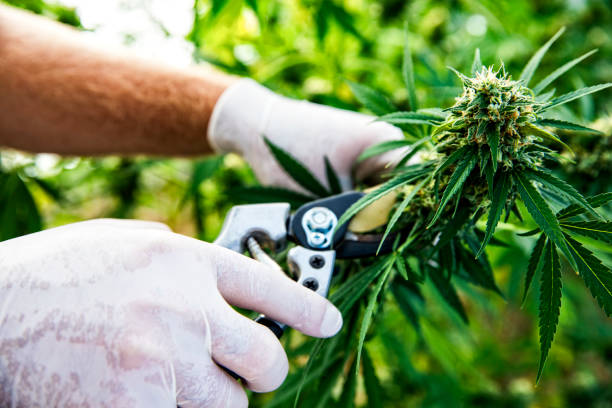
Trichome observation determines optimal harvest windows. Drying protocols, curing schedules, and storage conditions are critical for retention. Improper conditions can lead to more than 50% terpene degradation within 90 days.
Maintaining cool, stable environments with airtight storage preserves long-term aromatic integrity.
Monoterpenes and the Entourage Effect: What Growers Need to Know
Monoterpenes activate cannabinoid receptors directly, creating synergistic interactions with THC and CBD. This biochemical harmony defines consumer experiences. A deeper understanding of terpene–cannabinoid synergy is explored in the terpenes in cannabinoids guide.
Growers who optimize monoterpene expression during flowering produce more targeted consumer effects.
Testing and Analyzing Monoterpene Profiles for Quality Control
GC-MS provides precise monoterpene identification and quantification. Chiral GC further distinguishes enantiomers of compounds like Alpha-Pinene to authenticate natural genetics, a topic aligned with clean botanical insights at TrueToPlant.com.
Regular testing transforms cultivation into a data-driven discipline, establishing benchmark quality standards.
Breeding and Strain Selection for Desired Monoterpene Profiles
Genetic selection is the foundation of monoterpene expression. Breeding programs now prioritize terpene-rich profiles that match consumer preferences for wellness, focus, or mood elevation.
Backcrossing stabilizes monoterpene expression across generations, while phenotype hunting identifies superior terpene producers for cloning and production.
Mastering Monoterpenes: Your Path to Premium Cannabis
Your competitive advantage depends on applying monoterpene science at every stage genetics, environment, harvest, storage, and testing.
Platforms like World of Terpenes and EntourBrand provide education on this evolving field, helping growers build terpene-rich, differentiated, premium cannabis products.